
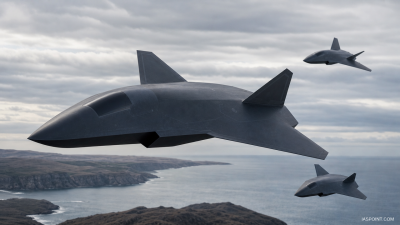
On 16 July 2026 the United Kingdom launched the Storm Fighter programme to develop autonomous “loyal wingman” drones to operate with crewed combat aircraft such as Typhoon, F‑35 and the planned Tempest.
Storm Fighter Programme
- Launch & funding: Announced 16 July 2026; funded via a £300 million allocation under the Defence Investment Plan published 2 July 2026.
- Objective: Develop collaborative combat aircraft (CCA) that operate alongside crewed fighters to extend reach and mission options.
- Early concepts: Storm Chrome (electronic attack) and Storm Fire (attritable one‑way attack; range cited up to 1,000 miles).
- Program lineage: Builds on StormShroud (entered service May 2025) and follows cancellation of Project Mosquito in 2022.
Loyal Wingman: Concept & Capabilities
- CCA definition: Unmanned systems designed to collaborate with crewed platforms for sensors, strike, electronic warfare or decoy roles.
- Autonomy model: Autonomous mission execution with human supervision via datalinks and mission management.
- Payload concepts: Reusable sensors/weapons, expendable strike variants, and electronic attack suites.
Strategic Linkages
- Integration targets: Typhoon, F‑35 and the UK‑led Tempest sixth‑generation fighter.
- GCAP connection: Global Combat Air Programme (UK‑Italy‑Japan) secured a £4.6 billion development contract on 3 July 2026; target entry ~2035.
IASPOINT Booster Facts
- RAF: Royal Air Force is the UK’s air arm.
- Project Mosquito: Cancelled in 2022 (UK loyal‑wingman effort).
- StormShroud: Entered service May 2025 as an antecedent autonomous drone.