
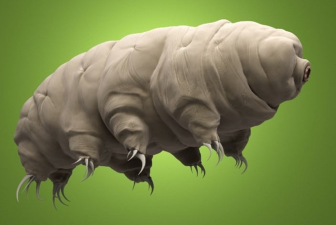
Marine biologists have discovered a new species of marine tardigrade, named Actinarctus odissi, from the intertidal and shallow sublittoral sediments of the Bay of Bengal along the Odisha coast. This finding is significant as it marks the first time in 43 years that a new species has been described under the genus Actinarctus. The discovery underscores how little we know about microscopic marine life (meiofauna) in the Indian Ocean and emphasizes the rich, hidden biodiversity of India’s coastal ecosystems. Technical Overview of the Species Tardigrades, popularly known as “water bears” or “moss piglets,” are microscopic, eight-legged animals celebrated for their ability to survive extreme environmental conditions. While terrestrial tardigrades are commonly found in mosses and lichens, marine tardigrades inhabit the spaces between sand grains (intertidal and deep-sea sediments).
Taxonomy and Classification
- Kingdom: Animalia
- Phylum: Tardigrada
- Class: Heterotardigrada
- Order: Arthrotardigrada (primarily marine tardigrades)
- Family: Halechiniscidae
- Genus: Actinarctus
- Species: Actinarctus odissi
Distinct Morphological Features
Actinarctus odissi possesses distinct physical traits that differentiate it from other species within its genus:
- Body Shape: It features a highly specialized, compacted, dome-shaped dorsal body.
- Lateral Wings (Alae): Unlike its closest relatives, which have expansive, wing-like cuticular expansions used to glide through water or grip sand grains, A. odissi has considerably shorter and more streamlined lateral wings.
- Sensory Appendages: It exhibits unique configurations and lengths in its cephalic (head) cirri and sensory organs on its legs, which help it navigate and sense changes in turbulent marine environments.
- Cuticular Envelopes: Like other member species of Actinarctus, its body is wrapped in a translucent, membrane-like cuticular matrix supported by internal pillars.
Collection and Research Methodology The discovery was made by analyzing benthic sediment samples collected from the shallow waters of the continental shelf off the Odisha coast.
- Depth of Discovery: The specimens were recovered from a shallow marine depth of 14 meters.
- Sampling Equipment: Scientists utilized a Van Veen grab sampler, a classic oceanographic instrument designed to collect structural bottom sediment samples from the seabed.
- Meiofauna Extraction: Because marine tardigrades are part of the meiofauna (organisms sized between 45 micrometers and 1 millimeter), the collected sand samples underwent a process of magnesium chloride (MgCl2) anesthetization and freshwater rinsing to detach the organisms from sand grains before they were filtered through fine mesh sieves for microscopic analysis.
Ecological Significance and Cryptoendolithic Resilience The discovery of Actinarctus odissi carries vital ecological and evolutionary implications:
- Marine Biodiversity Mapping: Marine tardigrades remain one of the least studied groups of marine invertebrates in the Indian Ocean. This discovery adds a vital piece to the baseline data of India’s marine faunal diversity.
- Bioindicators of Ecosystem Health: Meiofaunal organisms like tardigrades are highly sensitive to benthic pollution, heavy metal deposition, and ocean acidification. Mapping their distribution helps scientists monitor the health of coastal zones.
- Cryptobiosis and Survival: Members of the class Heterotardigrada possess the ability to enter cryptobiosis—a state of metabolic suspension—allowing them to survive extreme fluctuations in salinity, temperature, oxygen deficiency, and environmental stress typical of dynamic coastal environments.
IASPOINT Booster Facts for UPSC
Last Modified: May 26, 2026
- Arthrotardigrada: This is considered the most primitive group of tardigrades. Unlike terrestrial tardigrades, marine arthrotardigrades display highly diverse and elaborate bodily structures like claws, toes, and wing-like membranes to cope with high-energy wave zones.
- Van Veen Grab Sampler: A clam-shell style device used to sample sediment in water bodies. It relies on a lever-arm mechanism to bite into the ocean floor when the cable slackens.
- Meiofauna: Invertebrates that live in both marine and freshwater environments, defined by their size class—smaller than macrofauna but larger than microfauna. They play a critical role in nutrient cycling and serve as food for higher trophic levels like small fish.
- First in 43 Years: The genus Actinarctus was originally established in the early 20th century. The last valid species added to this specific genus prior to A. odissi was described back in the 1980s, highlighting the rarity and difficulty of locating these cryptic animals.