
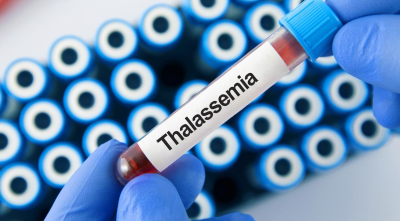
King George’s Medical University in Lucknow introduced an advanced genotyping blood test in 2026 to improve minor red cell antigen matching for approximately 500 thalassaemia patients who require frequent transfusions. This genetic testing analyzes DNA to offer more precise blood group identification than standard serological methods, preventing transfusion reactions and alloimmunisation. The initiative aligns with global medical advancements, such as the National Health Service in the United Kingdom launching similar genetic testing for thalassaemia and sickle cell patients. These developments, along with new targeted therapies, represent a major shift toward precision medicine for managing inherited hemoglobin disorders.
Understanding Thalassaemia and the HBB Gene
Thalassaemia is an inherited blood disorder characterized by reduced or absent hemoglobin production, leading to severe anemia. Hemoglobin is the iron-rich protein in red blood cells that carries oxygen throughout the body.
Genetic Basis of Beta Thalassaemia
Beta thalassaemia is caused by mutations in the HBB gene located on chromosome 11. This gene provides instructions for making a protein called beta-globin, which is a component of hemoglobin. Mutations in the HBB gene prevent the production of normal beta-globin chains, leading to a shortage of mature red blood cells and poor oxygen transport.
Complications of Conventional Management
Patients with severe forms of beta thalassaemia require lifelong, regular blood transfusions to maintain adequate oxygen levels. However, frequent transfusions lead to two primary complications:
- Alloimmunisation: The patient’s immune system recognizes foreign minor antigens on the transfused red blood cells and produces antibodies against them.
- Iron Overload: Repeated transfusions cause an accumulation of iron in body tissues, damaging vital organs such as the heart, liver, and endocrine glands.
The Evolution of Blood Matching: Serology vs. Genotyping
Traditional blood typing relies on serological methods, which detect major antigens like A, B, and Rh on the surface of red blood cells using specific antibodies. While effective for general transfusions, it is insufficient for multi-transfused patients.
Limitations of Serological Typing
Serology cannot accurately identify minor red cell antigens if the patient has recently received a transfusion, as the donor’s blood mixes with the recipient’s blood. This limitation increases the risk of mismatched transfusions and subsequent antibody formation.
Benefits of Genotyping Blood Tests
Genotyping isolates DNA from the patient’s cells to identify the precise genetic variants that determine both major and minor blood group antigens.
- Precision: It detects minor red cell antigens with high accuracy, independent of recent blood transfusions.
- Prevention: It reduces the risk of alloimmunisation by enabling precise matching between donor and recipient.
- Efficiency: It streamlines extended blood matching for patients with rare antigen profiles or existing antibodies.
Comparison of Blood Typing Methods
| Feature | Serological Typing | Genotyping Blood Tests |
| Primary Target | Surface antigens on red blood cells | DNA sequences regulating blood groups |
| Accuracy after Transfusion | Compromised due to donor-recipient cell mixing | Unaffected; provides true genetic profile |
| Scope of Detection | Limited primarily to major antigens (ABO, Rh) | Comprehensive profiling of minor antigens |
| Primary Utility | Routine blood transfusions and emergencies | Chronic transfusion-dependent disorders |
Advanced Therapeutic Alternatives
Beyond precise blood matching, recent medical approvals offer alternative pathways for managing transfusion-dependent beta thalassaemia.
CRISPR-Based Gene Editing (Casgevy)
Approved by regulatory bodies, Casgevy (exagamglogene autotemcel) is a cell-based gene-editing therapy for severe sickle cell disease and transfusion-dependent beta thalassaemia. It uses CRISPR/Cas9 technology to modify the patient’s own hematopoietic stem cells. The treatment edits the BCL11A gene to restart the production of fetal hemoglobin, which effectively replaces the defective adult hemoglobin and eliminates or reduces the need for regular blood transfusions.
Targeted Oral Medications
Advanced pharmaceutical research led to the regulatory approval of a new oral drug by the United States Food and Drug Administration (FDA). This drug functions by correcting ineffective erythropoiesis (red blood cell production) at the bone marrow level, improving hemoglobin levels and decreasing transfusion dependence.
IASPOINT Booster Facts for UPSC
- Minor Red Cell Antigens: Beyond the ABO and Rh systems, there are over 300 minor red cell antigens categorized into systems like Kell, Kidd, Duffy, and MNS, which trigger immune responses in multi-transfused individuals.
- HBB Gene Locus: The HBB gene is located on the short (p) arm of chromosome 11 at position 15.4.
- Casgevy Innovation: Casgevy is the first medicine utilizing CRISPR/Cas9 gene-editing technology to receive regulatory clearance.
- Sickle Cell Anaemia Link: Sickle cell disease is also caused by a specific mutation in the same HBB gene on chromosome 11, leading to abnormal hemoglobin S that distorts red blood cells into a crescent shape.
- National Sickle Cell Anaemia Elimination Mission: Launched by the Government of India, this mission aims to eliminate sickle cell disease as a public health problem by 2047, utilizing extensive genetic screening and counseling methodologies.