
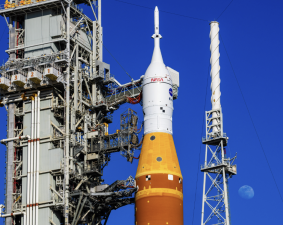
NASA detected a hydrogen leak during a wet dress rehearsal for the Artemis II mission, denoting the importance of full launch simulations before crewed deep-space flights. A dress rehearsal in rocketry is a complete run-through of launch-day operations to test people, hardware, software, and timelines as one integrated system. The incident has renewed focus on the role of cryogenic testing in identifying faults that may not appear in dry simulations.
What Is a Dress Rehearsal?
A dress rehearsal is a launch simulation that mirrors the sequence of operations on the day of liftoff. It helps teams verify countdown procedures, communication systems, and coordination between launch control, engineering, range safety, and crew operations. It is designed to expose logical or procedural problems before the actual launch.
Dry Dress Rehearsal
A dry rehearsal is carried out without loading cryogenic propellants into the rocket. During this test, teams power up vehicle and ground systems, simulate critical events, and validate decision-making. Many steps use simulated sensor inputs. This method helps identify operational gaps without the risks linked to fuel loading.
Wet Dress Rehearsal
A wet rehearsal is the closest safe approximation to launch day. The rocket is fuelled with actual cryogenic propellants, usually liquid oxygen and liquid hydrogen. Teams cool feed lines, load tanks, pressurise the system, monitor leaks, and carry out the countdown to its final stages. The test is stopped just before ignition, after which the vehicle is drained and returned to a stable state.
Why Wet Testing Matters
Wet rehearsals are crucial because they reveal issues that occur only under cryogenic conditions. These include leaks in seals and faults in connections between the rocket and ground equipment. Such tests help improve launch reliability and reduce the risk of failure during actual missions.
Last Modified: April 28, 2026