
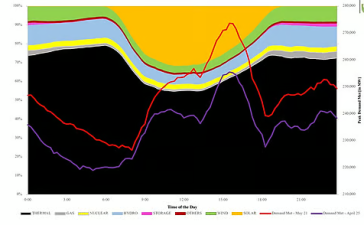
India recorded an all-time high peak power demand of 270.82 GW on May 21, 2026, driven by intense heatwave conditions that led to increased use of cooling appliances across households and commercial sectors. This milestone exceeded the Union Ministry of Power’s earlier summer projection of 270 GW and marked the fourth consecutive day of record-breaking power demand. Renewable energy sources, including hydropower, played a key role by contributing 34% to the daytime peak load and 28.9% to the total daily energy generation. Coal-based thermal power remained the primary source of electricity, especially during non-solar hours when alternative energy sources were less available.
Analysis of Peak Power Demand and Drivers
The surge in electricity usage reflects shifting consumption patterns driven by extreme summer weather and growing urbanization.
Appliance Penetration and Consumption Shifts
- Cooling Appliances Load: The extreme heat saw temperatures hover around 45 degrees Celsius in several parts of northwest and central India. This weather prompted full-blast operation of air conditioners and desert coolers, concentrating the peak load between 2:00 PM and 5:00 PM.
- AC Ownership Trends: Official estimates indicate India has around 1.3 crore air conditioning units, with ownership growing at an annual rate of 15% to 20%. This penetration extends beyond major urban pockets into semi-urban areas and small towns.
- Consumption Growth vs Connections: Data shows that while total electricity connections grew by 6% over a recent four-year period (from 33.5 crore to 35.4 crore), aggregate power consumption rose by 23% (from 1,317 billion units to 1,623 billion units), driven by heavy-load home appliances.
State-Level Demand Contributions
The afternoon peak load on May 21, 2026, was concentrated across industrialized and densely populated states:
- Maharashtra: Recorded the highest localized load contribution at 31.5 GW.
- Uttar Pradesh: Contributed 29 GW to the national grid.
- Gujarat: Registered a peak requirement of 25.9 GW.
- Delhi: Documented its highest summer peak for the season at 8,231 MW.
Grid Generation Mix During Peak Hours
The national grid utilized a combination of conventional and non-fossil fuel sources to successfully meet the 270.82 GW peak demand at 15:45 hours.
| Power Generation Source | Absolute Capacity Supplied at Peak | Percentage Share of Generation Mix |
| Thermal (Coal/Gas) | 171.7 GW | 62.8% |
| Solar Power | 59.58 GW | 22.0% |
| Hydropower | 15.70 GW | 5.8% |
| Wind Power | 13.60 GW | 5.0% |
| Other Sources (Nuclear, Bio-power, etc.) | 11.94 GW | 4.4% |
Solar and Wind Power Dynamics
Renewable energy capacity additions helped manage the afternoon load. Solar energy provided nearly a execution-level fifth of the peak requirement during peak sunshine hours. Wind energy also showed an increase, supplying 13.6 GW at the peak hour compared to just 4.89 GW during previous demand cycles in April.
Thermal Dependency and Non-Solar Vulnerabilities
Coal-based thermal power remained the primary anchor of the power system. While thermal generation stood at 171.7 GW during the afternoon solar hours, it had to ramp up to 184.9 GW during non-solar hours (7:00 PM to 7:00 AM) when solar generation dropped to zero. Managing the night-time peak is a major operational challenge for power distribution companies (discoms), as coal plants must run at near-maximum capacity to make up for the absence of solar power.
Supply Shortages and Infrastructure Bottlenecks
Despite meeting the overall national demand, localized supply gaps and transmission issues continue to affect grid operations.
Regional Power Deficits
The power system recorded minor generation gaps during peak operations on May 21, 2026. While the deficit during solar hours was limited to 0.18 GW, it expanded to 2.57 GW during non-solar hours. Seven states reported power shortages, with Haryana experiencing the highest deficit. Government officials clarified that widespread outages at the state level were caused by failures in local distribution networks rather than a lack of electricity at the national grid level.
Transmission Infrastructure Constraints
The growth of renewable energy faces challenges from lagging transmission infrastructure. Power generation from large-scale solar and wind projects in states like Rajasthan and Gujarat faces periodic curtailment or grid backdowns because transmission corridors lack the capacity to move surplus power to high-demand regions.
Energy Storage Requirements
To achieve grid stability during non-solar peak hours without relying solely on coal, India needs to expand its energy storage systems. Integrating Pumped Storage Projects (PSP) and Battery Energy Storage Systems (BESS) is essential to capture surplus daytime solar energy and discharge it into the grid during high-demand periods at night.
IASPOINT Booster Facts for UPSC
- National Load Despatch Centre (NLDC): The apex body designated by the Central Government under the Electricity Act, 2003, responsible for the optimum scheduling and dispatch of electricity among regional centers to ensure reliable grid operations across India.
- Resource Adequacy Planning: A long-term grid planning framework mandated by the Central Electricity Authority (CEA) that requires utilities to secure sufficient power generation capacity and storage reserves ahead of time to reliably meet projected peak demands.
- Installed Power Capacity Milestone: India’s total installed power capacity has crossed 538 GW. Non-fossil fuel sources, including solar, wind, hydro, and nuclear, account for over 50% of this total capacity.
- Grid Frequency Standardization: The Indian power grid operates at a synchronized standard frequency of 50.00 Hz. Deviations below or above tight operational bands can threaten grid stability and cause regional blackouts.
- PUShP Portal: The High Price Day Ahead Market and Surplus Power Portal launched by the Ministry of Power. It enables discoms to surplus or redirect available power capacity to deficit states during high-demand summer months, reducing power wastage.