
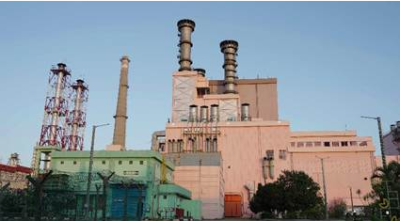
India’s 500 MWe Prototype Fast Breeder Reactor (PFBR) has attained first criticality, marking a major milestone in the country’s nuclear energy programme. First criticality means the start of a controlled fission chain reaction. The development strengthens India’s long-term energy security, indigenous reactor capability and three-stage nuclear power strategy.
What the Milestone Means
The PFBR has begun controlled operation after meeting all safety stipulations of the Atomic Energy Regulatory Board (AERB). Criticality is a key step before a reactor can move towards power generation. It shows that the reactor core, fuel, coolant and safety systems are functioning as designed.
Indigenous Design and Execution
- The reactor was designed by the Indira Gandhi Centre for Atomic Research (IGCAR).
- It was built and commissioned by Bharatiya Nabhikiya Vidyut Nigam Ltd (BHAVINI).
- The project reflects India’s domestic capability in advanced nuclear engineering, fabrication and commissioning.
- It also supports the goal of technological self-reliance under Atmanirbhar Bharat.
Fast Breeder Reactor Technology
The PFBR uses Uranium-Plutonium Mixed Oxide (MOX) fuel. It is surrounded by a blanket of Uranium-238, which can be converted into Plutonium-239 through neutron capture. This allows the reactor to produce more fissile material than it consumes. The design also supports future use of Thorium-232, which can be transmuted into Uranium-233 for the third stage of India’s nuclear programme.
Strategic and Energy Significance
- Fast breeder reactors bridge the gap between current heavy water reactors and future thorium-based reactors.
- They improve fuel efficiency and reduce dependence on limited uranium reserves.
- The closed fuel cycle helps recycle nuclear materials and reduce waste.
- The technology strengthens India’s clean energy, reactor physics and advanced materials capabilities.