
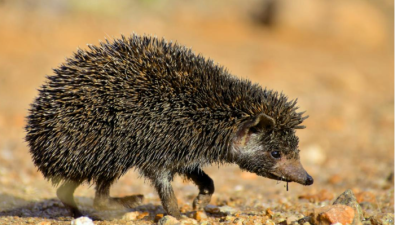
The first complete mitochondrial genome analysis of the Madras hedgehog (Paraechinus nudiventris), also called the bare-bellied hedgehog, has provided new insight into the evolutionary history of this little-known Indian mammal. The study helps fill a major gap in knowledge about a species long regarded as scientifically obscure, despite being native to southern India.
Key Scientific Breakthrough
The research successfully assembled, annotated and analysed the complete mitochondrial genome of the Madras hedgehog for the first time. The genome is 17,232 base pairs long and contains 13 protein-coding genes, 22 transfer RNA genes and two ribosomal RNA genes. This is the standard structure seen in vertebrate mitochondrial genomes.
Evolutionary Findings
The analysis found that the Madras hedgehog is a sister species to the Indian hedgehog (Paraechinus micropus). The two species are estimated to have diverged around 3.69 million years ago, during the late Pliocene to early Pleistocene period. This was a time of major climatic and geological change in South Asia, which may have influenced their evolutionary separation.
Habitat and Conservation Relevance
The Madras hedgehog inhabits semi-arid plains, dry grasslands, thorn forests and rocky landscapes. It is one of four hedgehog species found in India. The species has remained poorly studied because of limited genetic data and its elusive nature. The new genome information is expected to support future conservation planning and species identification.
Sampling and Research Significance
The DNA samples used in the study were collected from hedgehogs killed on roads in Thoothukudi district across an area of 62 square kilometres. The findings show the need for wider surveys to map the species’ distribution in India. The study also underlines the importance of genetic research for small mammals that remain under-documented in the country.
Last Modified: April 28, 2026