
Indian scientists have developed a new method to distinguish pollen of cultivated crops from wild grasses, a breakthrough that can help reconstruct the origins of agriculture in the Central Ganga Plain. The study addresses a long-standing problem in palaeoscience, where cereal pollen and wild grass pollen often appear almost identical under a microscope.
Scientific Challenge in Pollen Study
Pollen preserved in sediments is an important clue for understanding ancient vegetation, settlement patterns and environmental change. However, cereals such as wheat, rice, barley and millets belong to the Poaceae family, and their pollen closely resembles that of wild grasses. This has made it difficult to identify early farming activity with precision.
New Biometric Threshold
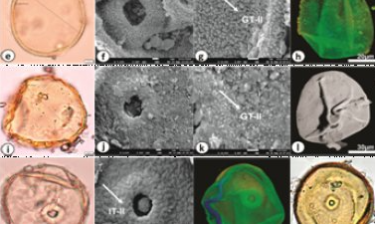
Researchers from the Birbal Sahni Institute of Palaeosciences studied 22 cereal and non-cereal grass species using light microscopy and electron microscopy. They established a paired biometric threshold to separate crop pollen from wild pollen. The study found that cereal pollen generally exceeds 46 micrometres in grain size and 9 micrometres in annulus diameter, while wild grass pollen remains below these values.
Importance for Central Ganga Plain
The Central Ganga Plain is one of India’s most fertile and heavily cultivated regions. The new method will help scientists reconstruct past ecosystems, track vegetation change and examine how human communities transformed the landscape over time. It also strengthens evidence-based study of the region’s agricultural development during the Holocene epoch.
Significance for Indian Archaeology
The research is because it uses indigenous data rather than European reference models. This makes it more suitable for Indian environmental and archaeological conditions. The findings are expected to improve studies on early agriculture, land use and human impact on ecosystems, and may help trace the gradual rise of the Ganga plains as a major farming zone.
Last Modified: April 28, 2026