
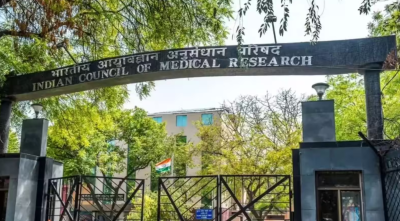
The Indian Council of Medical Research (ICMR) organized the “Medical Innovations Patent Mitra: Innovators-to-Industry (I2I) Connect” in New Delhi. This event marks India’s largest biomedical innovation and technology transfer initiative. The platform bridges the gap between public research laboratories and private manufacturers. During the event, ICMR institutes transferred 41 indigenously developed public health technologies to commercial entities. This commercialization step aims to scale up affordable medical products, diagnostics, and vaccines to achieve self-reliance in the health sector.
Objectives of Patent Mitra and I2I Connect
The initiative establishes a structured pipeline to take laboratory discoveries to the commercial market.
Translating Academic Research
Public research institutions often face a bottleneck where developed prototypes remain confined to laboratories. The Patent Mitra platform serves as an intermediary. It manages intellectual property rights and handles legal licensing requirements to help developers find commercial partners.
Strengthening the Biomedical Ecosystem
- Affordable Healthcare: It lowers dependence on costly imported medical devices and reagents by introducing local alternatives.
- Encouraging Entrepreneurship: It provides medical startups and MSMEs access to validated technologies, saving them primary research costs.
- Intellectual Property Management: The initiative helps researchers file patents and protects Indian traditional and modern medical knowledge from biopiracy.
Details of Key Technology Transfers
The 41 licensed technologies cover critical areas of public health, including infectious diseases, diagnostic kits, and vector control.
| Technology Category | Specific Innovation / Disease Target | Licensing Goal |
| Vaccines | Typhoid and Mpox (Monkeypox) candidates | Mass manufacturing for national immunization drives. |
| Diagnostics | Tuberculosis (TB) detection kits and rapid antigen tests | Field-level screening at Primary Health Centers (PHCs). |
| Vector Control | Biolarvicides and mosquito repellent formulations | Mitigating outbreaks of Dengue, Chikungunya, and Malaria. |
| Point-of-Care Devices | Portable screening devices for non-communicable diseases | Enhancing rural healthcare accessibility. |
Institutional Mechanics of Technology Transfer
The process of moving a biomedical innovation from an ICMR lab to a private manufacturer follows a fixed legal and technical protocol.
Intellectual Property Rights (IPR) Assistance
ICMR provides central funding and legal guidance to its 27 institutes for filing national and international patents. This step secures ownership before making contact with the industry.
Expressions of Interest (EoI)
ICMR invites competitive bids from pharmaceutical and medical device companies. The selection criteria depend on the company’s production capacity, quality control systems, and commitment to maintaining low prices for the Indian public.
Memorandum of Agreement (MoA)
Once selected, the industry partner enters into an MoA with ICMR. The partner receives the technology transfer, reference strains, or design blueprints. In return, they pay a fixed technology transfer fee and non-exclusive royalties based on subsequent commercial sales.
IASPOINT Booster Facts for UPSC
- About ICMR: Established in 1911 as the Indian Research Fund Association (IRFA) and renamed in 1949, ICMR is the apex body in India for the formulation, coordination, and promotion of biomedical research. It is funded by the Department of Health Research under the Ministry of Health and Family Welfare.
- Viksit Bharat 2047 Target: The initiative forms a core part of the health infrastructure goal within the developed India roadmap, aiming to reduce the medical device import dependency from the current estimate of nearly 70-80% to under 30% by 2047.
- National Intellectual Property Rights (IPR) Policy 2016: This policy governs tech transfers in India under the slogan “Creative India; Innovative India”. It seeks to promote commercialization of intellectual assets generated out of public-funded research.
- Bayh-Dole Act Analogy: The I2I connect acts similarly to the United States’ Bayh-Dole Act of 1980, which permits universities and public research organizations to retain ownership of inventions made under government funding and license them to private industries.