
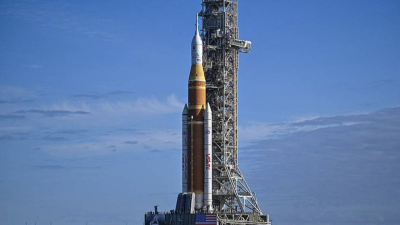
NASA is preparing for the rollout of Artemis 2, the first crewed mission of its Artemis programme and the first planned human flight around the Moon in more than five decades. The mission is expected to carry four astronauts on a 10-day journey around the Moon and back to Earth, marking a major step towards future lunar landings and deeper space exploration.
Mission Objective
Artemis 2 is designed as a crewed test flight for the Artemis programme. It will not land on the Moon. Instead, it will verify the performance of the Space Launch System rocket and the Orion spacecraft under real mission conditions. The flight will help NASA assess life-support systems, navigation, communications and crew safety before Artemis 3.
Launch Preparations
NASA plans to move the Space Launch System and Orion spacecraft to the launch pad at Kennedy Space Center in Florida no earlier than 17 January. The rocket stands 322 feet tall when fully assembled with the crew capsule. The move from the Vehicle Assembly Building to the launch pad is only 4 miles, but it can take up to 12 hours because of the scale and sensitivity of the hardware.
Testing and Safety Checks
Before launch, NASA will conduct a wet dress rehearsal at the end of January. This test includes fuelling the rocket with more than 700,000 gallons of cryogenic propellants, running a launch countdown, and practising propellant removal and safety procedures. Engineers have also been resolving technical issues, including leaks in ground support hardware used to supply oxygen to Orion. Weather and technical factors may still delay the rollout.
Artemis Programme Significance
Artemis 2 is part of NASA’s broader plan to return humans to the Moon, including the first woman and the first person of colour on a lunar mission in future flights. Artemis 3 is currently targeted to land astronauts on the lunar surface by 2028. NASA sees the Moon as a long-term base for sustained exploration and as a stepping stone towards human missions to Mars.
Last Modified: April 26, 2026