
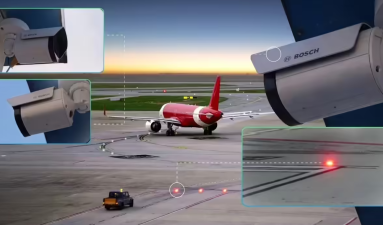
Kempegowda International Airport (KIA) in Bengaluru has integrated advanced artificial intelligence systems between 2025 and 2026 to optimize operational management, traffic enforcement, and campus security. Partnering with global technology firms like Mu Sigma, KPMG in India, Industry.ai, and Nvidia Corporation, the airport has deployed predictive models, automated workflows, and computer vision technologies. These innovations support the airport’s expanded infrastructure, including the international operations at Terminal 2 launched on August 31. This deployment reflects a broader modern trend of integrating AI into public transport infrastructure and aviation security to handle rising passenger volumes safely.
Key AI Implementations at Bengaluru Airport
The integration of artificial intelligence at KIA spans across multiple specialized platforms developed in collaboration with technology partners:
- Algorithmic Airport Model: Developed to provide decision intelligence, this system models airport workflows to predict resource constraints and streamline passenger flow.
- Generative AI Platform: Built for process automation, this platform analyzes historical data to offer predictive insights into daily flight operations and baggage handling.
- Computer Vision at Terminal 2: Utilizing Nvidia’s hardware and specialized software, computer vision systems track terminal occupancy, queue lengths, and asset utilization in real time.
- AI-Powered Traffic Enforcement: A campus-wide network of 24/7 surveillance cameras automatically detects traffic violations such as helmetless riding, triple riding, and traffic signal jumping.
Core Dimensions of AI in Aviation Infrastructure
Operational Efficiency and Resource Allocation
AI algorithms analyze data points from air traffic control, weather forecasts, and airline schedules to optimize gate assignments and tarmac movements. Predictive maintenance schedules airport assets like baggage belts, escalators, and refueling stations before mechanical failures occur.
Passenger Processing and Experience
Computer vision systems measure wait times at check-in counters, security checkpoints, and immigration desks. The system alerts airport managers to open additional counters when passenger queues exceed specific thresholds, reducing terminal congestion.
Perimeter Security and Surveillance
AI-enabled video analytics monitor restricted areas around the airport perimeter. The system automaticallyflags unauthorized human intrusion, left luggage, or unusual loitering, reducing reliance on manual screen monitoring by security personnel.
Comparative Overview: Traditional vs. AI-Driven Airport Operations
| Operational Domain | Traditional Mechanism | AI-Driven Mechanism |
| Queue Management | Manual monitoring by ground staff | Real-time computer vision tracking with automated alerts |
| Traffic Enforcement | Physical deployment of police personnel | 24/7 automated camera detection with electronic ticketing |
| Asset Maintenance | Fixed calendar-based servicing | Condition-based predictive maintenance analytics |
| Flight Slot & Gate Allocation | Reactive scheduling based on radio updates | Predictive modeling using historical and real-time flight data |
Global Examples of AI in Aviation
- Changi Airport (Singapore): Uses AI-driven predictive modeling to estimate exact flight arrival times, optimizing ground handling and baggage delivery speeds.
- Heathrow Airport (London): Deployed AI-powered digital towers to monitor aircraft movements during periods of low visibility and heavy fog.
- Atlanta Hartsfield-Jackson (USA): Utilizes biometric AI facial recognition systems to speed up international boarding processes.
IASPOINT Booster Facts for UPSC
- DigiYatra Initiative: A facial recognition technology (FRT) based biometric boarding system launched by the Ministry of Civil Aviation in India. It enables paperless and contactless processing of passengers at various checkpoints using a decentralized ID wallet.
- Air Sewa Portal: An initiative by the Ministry of Civil Aviation to offer a digital platform for passenger grievance redressal, flight status tracking, and airport information.
- Nvidia Metropolis: The application framework used globally for building AI-driven smart cities and transport infrastructure, which powers the visual AI systems at modern airports.
- Drone Rules, 2021: Regulations governing drone operations around Indian airports, establishing “No-Fly Zones” or Red Zones within a specific radius of airport perimeters to protect aviation airspace.
- International Civil Aviation Organization (ICAO): A UN specialized agency established in 1944 by the Chicago Convention, which sets global standards for aviation safety, security, and digital infrastructure integration.