
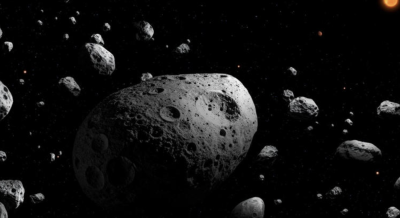
The first peer-reviewed results from the Vera C. Rubin Observatory have identified 2025 MN45, the fastest-spinning asteroid known in its size class. The asteroid is about 2,300 feet, or 710 metres, wide and completes one rotation in roughly 113 seconds. It is the fastest-spinning known asteroid larger than 1,640 feet, or 500 metres, in diameter. The finding comes from early survey data gathered by the observatory’s LSST Camera, which will repeatedly scan the Southern Hemisphere sky for 10 years.
Discovery from Rubin’s First Data
The asteroid was detected in preliminary observations released by the observatory. In just seven nights, the survey identified thousands of previously unknown asteroids. The new study is the first peer-reviewed paper based on data from the Rubin Observatory’s LSST Camera, the world’s largest digital camera.
Why the Spin Matters
Scientists used the asteroid’s lightcurve, or changes in brightness during rotation, to calculate its spin rate. The rapid rotation suggests that 2025 MN45 must have strong internal cohesion. Most asteroids are thought to be rubble piles, made of loosely bound rock fragments. A body of this size spinning so quickly would normally break apart unless it had rock-like strength.
Clues to Asteroid Structure
Researchers believe such fast rotation may result from a past collision or from the breakup of a larger parent asteroid. The object is located in the main asteroid belt between Mars and Jupiter, where most asteroids are loose rubble and usually rotate more slowly. Any main-belt asteroid spinning faster than about 2.2 hours is considered structurally unusual.
Broader Survey Findings
The same dataset has also revealed:
- 16 super-fast rotators with periods between 13 minutes and 2.2 hours.
- Two ultra-fast rotators with spins of less than two minutes.
- About 1,900 previously unseen asteroids in the commissioning data.
- Most of the new objects are in the main asteroid belt.