
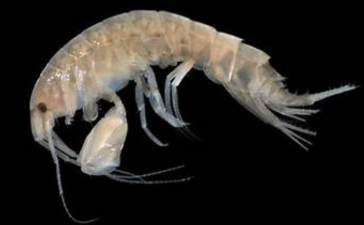
A tiny crustacean from the Kavaratti lagoon in Lakshadweep has been identified as a new genus and a new species. Named Indiaphonte bijoyi, it belongs to the family Laophontidae under the class Copepoda. The discovery adds to the biodiversity record of India’s marine ecosystems and marks the scientific importance of meiofauna in coastal habitats.
Discovery and Naming
The organism was scientifically described by a researcher from the Department of Marine Biology, Cochin University of Science and Technology, in collaboration with a copepod taxonomist from UNAM University, Mexico. The generic name Indiaphonte honours India. The species name bijoyi recognises S. Bijoy Nandan, a marine scientist and academician known for work in benthic and meiofaunal research.
Physical Features
- The crustacean is microscopic and can be studied only under a microscope.
- It has a semi-cylindrical, depressed body that is wider in the middle and tapers towards the rear.
- It has antenna-like appendages at the front.
- Females measure about 518 to 772 micrometres.
- Males measure about 508 to 756 micrometres.
Scientific Importance
The new genus was established because the organism shows a unique combination of morphological traits not seen in any previously recorded genus within Laophontidae. This family is among the most diverse in the order Harpacticoida, with hundreds of species across many genera. Such discoveries help improve taxonomic understanding of marine biodiversity, especially in underexplored island ecosystems.
Ecological Role
Meiofauna are tiny invertebrates living in sediments of aquatic environments. Though small, harpacticoid copepods play an important ecological role. They help maintain the health of marine and freshwater ecosystems and are useful in aquaculture as live feed for fish larvae. They also contribute to the production of omega-3 fatty acids such as EPA and DHA, which support fish growth and human nutritional security. Their sensitivity to pollution, oil spills, heavy metals and climate change makes them useful bio-indicators of environmental change.
Last Modified: April 27, 2026