
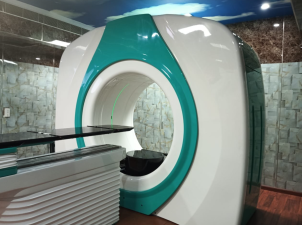
The Army Hospital (Research & Referral) in New Delhi commissioned a state-of-the-art Ring Gantry-based Linear Accelerator into its Department of Radiation Oncology on May 25, 2026. Attended by Defence Secretary Rajesh Kumar Singh, this induction aims to expand in-house cancer treatment capabilities for serving military personnel, veterans, and their dependents. The advanced equipment replaces outdated infrastructure and marks the initial phase of a systematic modernization program for oncology units across the Armed Forces Medical Services (AFMS).
Understanding Linear Accelerator Technology
A Medical Linear Accelerator (LINAC) is a device that customizes high-energy X-rays or electrons to conform to the precise shape of a tumor. The primary objective is to destroy cancer cells while sparing the surrounding healthy tissue.
Operational Mechanism
- Electron Generation: The process begins at a heated tungsten filament (cathode) that releases electrons.
- Acceleration: An intense electric field drives these electrons through an accelerating waveguide. Within this tube, microwave technology accelerates the particles close to the speed of light.
- Beam Shaping: Magnets focus the high-speed electron beam, which then strikes a heavy metal target to produce high-energy X-rays. A multileaf collimator located in the machine head shapes the radiation beam to match the specific dimensions of the target tumor.
Features of Ring Gantry Design
Traditional LINAC systems use a C-arm gantry that rotates around a central pivot point. In contrast, a Ring Gantry system houses the radiation delivery components within a closed, circular structure.
Technical Advantages
- Rotational Speed: The ring architecture enables faster gantry rotation speeds compared to conventional C-arm mechanisms. This reduces the overall duration of a treatment session.
- Mechanical Stability: The dual-sided support structure minimizes mechanical sag and alignment errors during continuous rotation.
- Bore Size: A wider central opening accommodates diverse patient sizes and allows flexible immobilization setups without structural interference.
Advanced Radiotherapy Techniques
The newly commissioned Ring Gantry system supports five core modalities of advanced radiation therapy, which optimize dosage delivery based on tumor location, movement, and density.
| Radiotherapy Technique | Operational Principle | Primary Clinical Application |
| Intensity-Modulated Radiation Therapy (IMRT) | Adjusts the intensity of individual radiation beams into multiple smaller, computer-controlled volumes. | Head and neck cancers, prostate cancer, central nervous system tumors. |
| Volumetric Modulated Arc Therapy (VMAT) | Delivers a continuous, 360-degree arc of radiation while simultaneously altering the beam shape and dose rate. | Pelvic malignancies, lung cancers, and deep-seated abdominal tumors. |
| Image-Guided Radiation Therapy (IGRT) | Integrates real-time 2D or 3D imaging protocols during the radiation session to adjust for anatomical shifts. | Tumors located near critical organs or regions prone to respiratory movement. |
| Stereotactic Body Radiation Therapy (SBRT) | Administers very high doses of radiation over a limited number of treatment sessions (typically one to five). | Small, isolated tumors in the lungs, liver, spine, or pancreas. |
| Stereotactic Radiosurgery (SRS) | A non-surgical procedure that delivers a single, highly concentrated dose of radiation directly to intracranial targets. | Brain metastases, acoustic neuromas, and arteriovenous malformations. |
IASPOINT Booster Facts for UPSC
- Armed Forces Medical Services (AFMS): Headed by the Director General Armed Forces Medical Services (DGAFMS), this apex body oversees the integrated medical grid across the Indian Army, Navy, and Air Force.
- Radiation Modalities: Photons and protons are generally reserved for deep-seated internal tumors, whereas electron beams are used to treat superficial tissues and skin malignancies.
- First-Ever Achievements at AHRR: The Army Hospital (Research & Referral) has a history of technical introductions. In 2025, it performed India’s first 3D Flex Aqueous Angiography with iStent for glaucoma and became the first government institute to utilize the ALLY Adaptive Cataract Treatment System for robotic cataract surgery.
- Linac vs. Gamma Knife: While a Linear Accelerator utilizes microwave-accelerated electrons to produce high-energy X-rays, a Gamma Knife relies exclusively on the natural decay of Cobalt-60 isotopes to emit gamma rays for target destruction.