
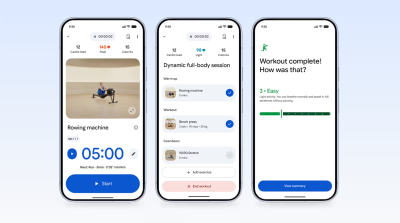
Google launched Google Health Coach in India on May 7, 2026, integrating it into its newly rebranded Google Health app (formerly the Fitbit app). The global automatic roll-out begins on May 19, 2026, and is scheduled to reach all eligible users by May 26, 2026. This service uses advanced Gemini artificial intelligence models to deliver personalized, adaptive wellness guidance based on individual physiological and lifestyle inputs. In India, the premium service tier is priced at Rs. 99 per month or Rs. 999 annually, and it is bundled without extra charge into specific Google AI Pro and Google AI Ultra subscription plans.
Structural and Architectural Redesign
The launch accompanies a complete overhaul of Google’s health informatics ecosystem, consolidating multiple platforms under a unified user interface.
App Rebranding and Reorganization
The transformation of the legacy Fitbit application into the Google Health app introduces an architecture divided into four functional navigation pillars:
- Today Tab: Serves as the central operational hub where the Google Health Coach delivers proactive, real-time wellness insights and correlates parameters like daily steps, calorie expenditure, heart rate, and regional weather conditions.
- Fitness Tab: Houses customized workout modules, active training logs, and a flexible weekly cardio target framework that replaces rigid daily objectives.
- Sleep Tab: Provides tracking parameters focused on nocturnal rest consistency and physiological recovery.
- Health Tab: Consolidates core body vitals, clinical screenings, immunization timelines, and nutritional macro-nutrient targets.
Cross-Platform Data Integration
To ensure a comprehensive view of user health data, the platform supports multi-source data ingestion. It synchronizes variables from proprietary wearables, like the Pixel Watch and Fitbit devices, alongside third-party applications through Health Connect for Android and Apple Health for iOS. Later in 2026, legacy Google Fit users will also undergo a guided data migration into this singular ecosystem.
Core Capabilities and Machine Learning Advancements
The integration of generative artificial intelligence models shifts health applications from simple data aggregation to predictive, conversational coaching.
Gemini-Powered Conversational Analysis
The Google Health Coach uses large language models trained alongside medical professionals, sports scientists, and clinicians. The coach analyzes complex datasets to explain biological correlations—such as how menstrual cycle phases alter workout readiness or how daily stress metrics impact sleep architecture—using natural language processing.
Enhanced Sleep Diagnostics
The underlying machine learning frameworks introduce updated signal-processing algorithms for sensor arrays. This software modification improves the detection accuracy of distinct sleep stages (Light, Deep, and REM sleep) by approximately 15% without requiring new hardware components.
Data Privacy and Compliance Framework
Given the sensitive nature of consumer health informatics, the platform operates under restricted data governance boundaries.
Operational Boundaries and Privacy
| Feature Category | Policy Protocol and Operational Status |
| Advertising Integration | Explicitly decoupled; health and wellness metrics are legally barred from Google Ads monetization. |
| User Data Autonomy | Granular user control allowing selective storage, sharing, or permanent deletion of specific data packets. |
| Medical Certification | Defined strictly as a wellness utility; not intended for diagnostic or formal clinical medical purposes. |
| Social Profile Security | Group communities and direct messages are removed; social leaderboards use basic Google account credentials. |
IASPOINT Booster Facts for UPSC
- About Health Connect: A joint platform built by Google and Samsung that provides an Android-based API to securely share fitness and health data across different apps and hardware brands with on-device encryption.
- VO2 Max Metric: The Google Health app officially renames “Cardio Fitness Score” to VO2 Max, which measures the maximum volume of oxygen an individual can utilize during intense exercise. It can now combine GPS runs with third-party app inputs.
- Epithelial and Biosensor Changes: Wearable sleep-stage detection relies heavily on photoplethysmography (PPG) sensors, which emit green light into skin capillaries to track volumetric changes in blood flow during heartbeats.
- Biometric Data Exclusion: Under the updated social profile sharing architecture of the Google Health app, sensitive data fields including biological sex, height, weight, and geographical location are automatically hidden from friends and leaderboards to prevent unauthorized profiling.