
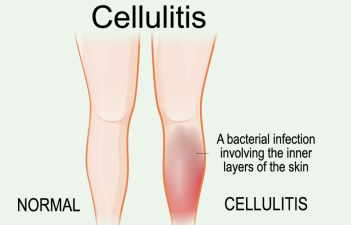
Cellulitis is a common bacterial skin infection that affects the deeper layers of the skin and subcutaneous tissues. It usually enters through broken skin, wounds, or areas of poor skin integrity. The infection most often affects the legs, feet and toes, but it can also occur on the face, arms, hands and fingers. If not treated promptly, it may spread to the lymph nodes and bloodstream and can require hospital care.
What Cellulitis Is
Cellulitis is caused mainly by streptococcus and staphylococcus bacteria. It is not contagious, but it can develop when bacteria enter through cuts, scratches, ulcers or other skin breaks. People with weakened immune systems, diabetes, poor skin hygiene or repeated skin injuries are at higher risk. It may affect one side of the body and can range from mild to severe.
Common Symptoms
- The affected skin may become warm, swollen and tender.
- Discolouration may appear and become darker as the infection spreads.
- Patients may develop pain, fever, chills and fatigue.
- Blisters, spots and skin dimpling can also occur.
- In severe cases, the infection may spread beyond the skin.
Treatment and Prevention
Treatment usually involves a course of oral antibiotics. Severe cases may need hospitalisation and intravenous antibiotics. Supportive care may include warm compresses, leg elevation, compression socks and rest. Preventive measures include regular handwashing, cleaning and trimming nails, keeping wounds clean, drying the skin properly after bathing and wearing clean clothes. Completing the full antibiotic course is essential to prevent relapse and complications.
Cellulitis in Clinical Studies
Recent clinical observations show that cellulitis is common among working-age men, especially those exposed to trauma in field jobs. Diabetes and smoking are important risk factors. Studies on lower limb cellulitis have also shown that swelling and inflammation may improve quickly with antibiotics, but pain and discomfort can persist even after treatment ends. This makes early diagnosis and follow-up important in exam-relevant public health discussions.
Last Modified: April 25, 2026