
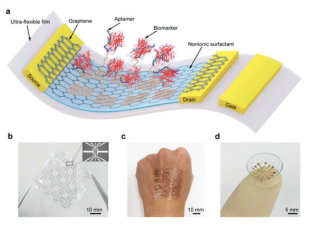
A flexible, low-cost graphene-based biosensor has been developed to detect myoglobin, an early cardiac biomarker released into the bloodstream soon after heart muscle injury. The device is designed for rapid, portable and point-of-care testing, with potential use in emergency care and low-resource settings. The work was carried out through an Indo-Australian collaboration between BITS Pilani–Hyderabad and RMIT University, Australia.
What the Biosensor Detects
The sensor targets myoglobin, a protein that appears in blood shortly after the onset of cardiac muscle damage. Early detection of this biomarker can help doctors identify a possible heart attack at a much earlier stage than many conventional diagnostic methods. This can improve the speed of clinical decision-making.
Key Features of the Device
- The sensor is based on graphene, which supports sensitive detection.
- It is lightweight and flexible, making it suitable for portable use.
- It is economical compared with many laboratory-based diagnostic systems.
- It is intended for rapid testing without dependence on complex infrastructure.
Research Collaboration and Patent
The innovation emerged from collaboration between the MMNE Laboratory at BITS Pilani–Hyderabad and the Centre for Opto-Electronic Materials and Sensors at RMIT University. The team has filed an Indian patent for the technology, indicating its translational and commercial potential. The research was published in IEEE Sensors Letters.
Public Health Significance
The biosensor may be especially useful in rural hospitals, emergency rooms and other low-resource healthcare facilities where advanced diagnostic equipment is limited. Its main value lies in making early heart attack detection faster, simpler and more accessible. Such technologies are important for improving cardiac care at scale.
Last Modified: April 27, 2026