
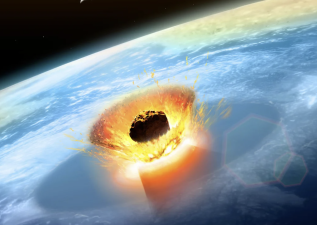
A long-debated structure beneath the southern North Sea has now been confirmed as a genuine asteroid impact crater. New geological and seismic evidence shows that the Silverpit Crater was created around 43 to 46 million years ago when a high-speed space rock struck the seabed. The impact likely produced a powerful tsunami and left behind one of the best-preserved underwater craters known on Earth.
Location and Discovery
Silverpit lies about 700 metres below the seabed, around 80 miles off the Yorkshire coast in the United Kingdom. It was first identified in 2002. The crater is about three kilometres wide and is surrounded by circular faults extending nearly 20 kilometres across. Its unusual shape made it a subject of scientific debate for more than two decades.
Why the Origin Was Disputed
Scientists initially considered an asteroid impact, but other explanations were also proposed. These included salt movement beneath the seabed and volcanic collapse. The crater’s circular form, central peak and ring-like faults resembled known impact structures. However, in 2009, many experts voted against the impact theory because the evidence then available was not conclusive.
New Evidence from the Seabed
Researchers later used improved seismic imaging and geological samples from the area. They found shocked quartz and feldspar crystals at the crater floor. Such minerals form only under extreme pressure, which is characteristic of asteroid impacts. This discovery provided strong proof that a fast-moving space object struck the seabed.
Impact, Tsunami and Scientific Value
The asteroid is estimated to have been about 160 metres wide and hit at a shallow angle from the west. Scientists believe the collision threw up a 1.5-kilometre-high curtain of rock and water, which collapsed and generated a tsunami more than 100 metres high. Silverpit is now seen as a rare and well-preserved underwater impact crater. It offers important evidence for studying ancient asteroid strikes, tsunami generation and planetary surface processes.
Last Modified: April 29, 2026