
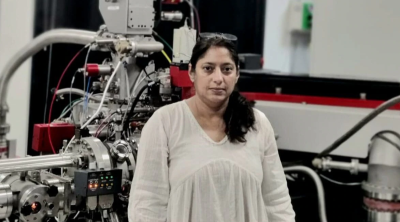
Professor Kuljeet Kaur Marhas from the Physical Research Laboratory (PRL) in Ahmedabad was elected as a Fellow of The Meteoritical Society for 2026. This election makes her the first Indian woman and only the third Indian scientist to receive this international honor since the society’s inception in 1933. The fellowship acknowledges her exceptional contributions to cosmochemistry, meteoritics, and planetary sciences, specifically her research into understanding the formation and earliest evolution of the Solar System. Her election follows the legacy of previous Indian fellows, Professor Devendra Lal and Professor J.N. Goswami, placing Indian planetary science research at the forefront of global laboratory-based extraterrestrial studies.
Institutional Framework and Fellowship Structure
The evaluation of planetary materials relies heavily on academic frameworks that foster international collaboration and validate scientific breakthroughs.
The Meteoritical Society
- Establishment and Focus: Founded in 1933, the society is a distinguished international organization dedicated to studying meteorites, cosmic dust, planetary materials, and impact phenomena.
- Global Membership: It integrates researchers from over 50 countries, facilitating the cataloging of newly discovered extraterrestrial materials through its Meteorite Nomenclature Committee.
- The Fellowship Academic Honor: Fellowships are limited to a select group of members who have demonstrated exceptional, sustained research in meteoritics and planetary materials. Elections are conducted biennially by the society’s council.
Physical Research Laboratory (PRL)
- Genesis: Founded in 1947 by Dr. Vikram Sarabhai in Ahmedabad, PRL is an autonomous premier research institution operating under the Department of Space, Government of India.
- Core Mandate: It serves as a primary hub for research in space sciences, astronomy, astrophysics, solar physics, geosciences, and planetary exploration.
- Planetary Sciences Division: The division specializes in the laboratory analysis of materials returned from space missions and recovered meteorites, providing the baseline chemical data that supports Indian deep-space ventures.
Core Research Contributions of Prof. Kuljeet Kaur Marhas
The scientific work carried out by Prof. Marhas uses analytical techniques to extract structural and timeline data from microscopic space samples.
Cosmochemistry and Solar System Origins
- Isotopic Fingerprinting: By studying subtle differences in the atomic and isotopic composition of extraterrestrial samples, her research decodes the exact timing of early Solar System processes.
- Short-Lived Radionuclides (SLRs): Her research evaluates the presence of extinct radionuclides in primitive meteorites, helping scientists calculate the timespan between ancient stellar explosions and the aggregation of the first solid materials in space.
- Primitive Component Mapping: Her work isolates and characterizes primitive components such as pre-solar grains, chondrules, Calcium-Aluminum-rich Inclusions (CAIs), and complex organic matter trapped inside primitive chondrite meteorites.
Analysis of Global Space Mission Samples
- Apollo Program (NASA): Laboratory evaluation of lunar soil and rock core samples returned by the Apollo missions to understand the formation and geological evolution of the Moon.
- Stardust Mission (NASA): Isotopic and chemical verification of cometary dust particles captured from the coma of Comet Wild 2.
- Hayabusa Mission (JAXA): High-precision examination of pristine asteroidal surface materials returned from the near-Earth asteroid Itokawa.
Analytical Technology in Cosmochemistry
Advanced laboratory methods allow scientists to examine elemental and isotopic patterns at sub-micron scales without altering the core structure of scarce extraterrestrial materials.
Secondary Ion Mass Spectrometry (SIMS)
- Working Principle: A finely focused primary ion beam bombards the surface of a target meteorite sample, sputtering away secondary ions from the top atomic layers.
- Mass Analysis: These ejected secondary ions are accelerated, focused, and filtered through a mass spectrometer based on their specific mass-to-charge ratios.
- Data Yield: This enables high-precision mapping of elemental concentrations and stable isotope ratios within microscopic mineral phases.
NanoSIMS Technology
- Spatial Resolution: An advanced evolution of traditional SIMS, NanoSIMS focuses the primary ion beam down to less than 50 nanometers.
- Pre-solar Grain Detection: This high resolution allows scientists to isolate and measure individual pre-solar grains, which are microscopic stellar remnants that existed before the Sun formed.
Comparative Profile of Indian Meteoritical Society Fellows
Only three Indian scientists have broken into this elite circle of space researchers, all of whom have held leadership or senior research positions at PRL Ahmedabad.
| Scientist | Year of Election | Primary Specialization Area | Major Scientific Milestone |
| Prof. Devendra Lal | 1970 | Nuclear Geophysics & Cosmic Ray Physics | Used cosmic ray tracks in meteorites and lunar samples to calculate ancient solar activity and erosion rates. |
| Prof. J.N. Goswami | 2002 | Solar System Evolution & Cosmochemistry | Served as the Principal Scientist for India’s Chandrayaan-1 lunar mission; investigated early solar system chronology. |
| Prof. Kuljeet Kaur Marhas | 2026 | Extraterrestrial Isotopes & NanoSIMS Analysis | First Indian woman fellow; mapped pre-solar grains and short-lived radionuclides across multiple global sample return missions. |
IASPOINT Booster Facts for UPSC
- Pre-Solar Grains: Tiny mineral crystals formed in the cooling outflows of dying stars before the creation of our Solar System. Preserved inside primitive meteorites, they provide direct material evidence of stellar nucleosynthesis.
- Calcium-Aluminum-Rich Inclusions (CAIs): Sub-millimeter to centimeter-sized light-colored inclusions found in chondritic meteorites. They are the oldest dated solids formed within our solar nebula.
- Chondrules: Round grains found in chondrites that formed as molten or partially molten droplets in space before being accreted into the parent asteroids.
- Devendra Lal Memorial Medal: Awarded by the American Geophysical Union (AGU) to recognize outstanding Earth and space scientists belonging to developing nations. Prof. Marhas is a recipient of this medal and is also an elected Fellow of the AGU.
- Meteorite vs. Meteoroid vs. Meteor: A meteoroid is a small rocky or metallic body traveling through space. When it enters Earth’s atmosphere and vaporizes, creating a streak of light, it is called a meteor. If any portion survives the atmospheric plunge and strikes the ground, it is classified as a meteorite.