
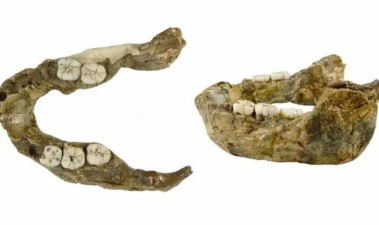
Recent fossil jawbone discoveries across Africa and Eurasia have transformed the scientific understanding of early human evolution and ancestral migration pathways. These key findings, recovered from critical sites in South Africa, Ethiopia, Georgia, and the Taiwan Strait, span the Pliocene and Pleistocene epochs. The specimens reveal an unexpected degree of anatomical diversity and geographical adaptability among extinct human relatives. By redefining the structural and territorial boundaries of genera like Paranthropus and early Homo, these discoveries clarify how archaic hominins spread and interacted across different continents.
Major Jawbone Discoveries and Evolutionary Impact
Paranthropus capensis (South Africa)
A 1.4-million-year-old fossilized jawbone designated as SK 15, originally found in 1949 within the Swartkrans cave system, has been reanalyzed using high-resolution X-ray scans and virtual 3D modeling. The specimen was historically misclassified as Telanthropus capensis and later as Homo ergaster. The modern structural analysis of its internal dentine and smaller, more gracile jaw architecture confirmed it belongs to the genus Paranthropus. This reclassification identifies a entirely new species named Paranthropus capensis, establishing that at least two distinct Paranthropus lineages coexisted in southern Africa during the Early Pleistocene.
Paranthropus Species Expansion (Ethiopia)
Researchers unearthing a 2.6-million-year-old partial lower jawbone in the Mille-Logya research area of the Afar region have extended the known geographical range of the Paranthropus genus. This find marks the first time a Paranthropus specimen has been recovered this far north, extending the territorial boundary of the genus by more than 600 miles. Micro-CT scanning and stable carbon isotope analysis of the tooth enamel indicate that these hominins possessed large molar roots for heavy chewing but consumed a varied diet of grasses and sedges. The evidence shows they were versatile enough to live directly alongside early species of the genus Homo.
Homo erectus (Republic of Georgia)
Excavations at the Orozmani archaeological site, located south of Tbilisi, yielded a 1.8-million-year-old lower jawbone belonging to Homo erectus. This fossil stands as one of the earliest well-documented human remains found outside the African continent. Contemporary with the nearby Dmanisi fossil site, the Orozmani jawbone was discovered alongside ancient stone tools and animal remains, including saber-toothed tigers and elephants. The discovery confirms that multiple early human groups migrated from Africa into the southern Caucasus region, adapting successfully to Eurasian ecosystems soon after the genus emerged.
Denisovan Mandible (Taiwan Strait)
An ancient hominin jawbone known as “Penghu 1,” recovered by fishermen from seafloor sediments in the Penghu Channel near the Taiwan Strait, has provided rare structural data on eastern Asian archaic humans. Advanced protein sequence analysis conducted on the deep-sea fossil confirmed that the robust, chinless mandible belonged to a male Denisovan. The specimen is stratigraphically dated between 200,000 and 40,000 years ago, corresponding to periods of low sea levels when the channel was part of the Asian mainland. This identification anchors Denisovan physical presence in subtropical maritime Asia, moving beyond the group’s previously known limits in Siberia and Tibet.
Chronological and Geographical Matrix of Recent Finds
| Fossil Specimen / Name | Discovery Location | Estimated Geologic Age | Genus / Species Classification | Key Scientific Significance |
| SK 15 | Swartkrans Cave, South Africa | ~1.4 Million Years | Paranthropus capensis | Reclassified from Homo; proves co-existence of multiple robust lineages in South Africa. |
| Mille-Logya Mandible | Afar Region, Ethiopia | ~2.6 Million Years | Paranthropus (Species Unspecified) | Extends the known range of the genus 600 miles north; shows dietary versatility alongside early Homo. |
| Orozmani Jawbone | Kvemo Kartli, Georgia | ~1.8 Million Years | Homo erectus | Represents one of the oldest hominin remains outside Africa; maps early Eurasian migration. |
| Penghu 1 | Penghu Channel, Taiwan Strait | 40,000 to 200,000 Years | Denisovan (Homo variant) | Confirmed via protein analysis; expands Denisovan geographic distribution to coastal East Asia. |
Anthropological Methodologies in Modern Fossil Analysis
High-Resolution Micro-CT Scanning
X-ray micro-computed tomography allows paleoanthropologists to construct non-destructive 3D virtual models of fragile fossils. This technique exposes the internal dentine structures, root networks, and jaw bone density without physical sectioning, enabling precise taxonomic reclassifications of highly weathered bones like SK 15.
Palaeoproteomics
When fossils are too old or degraded to yield viable ancient DNA (aDNA), researchers analyze surviving ancient protein sequences preserved within tooth enamel or bone collagen. This method proved instrumental in matching the Penghu 1 mandible to the Denisovan lineage, bypassing the environmental limitations of DNA degradation in warm climates.
Stable Isotope Ecology
Carbon isotope analysis (13C/12C ratios) embedded in fossilized tooth enamel reveals the primary vegetation consumed by early hominins. This technique disproved the long-held theory that the robust “Nutcracker” jaw of Paranthropus locked the genus into a restrictive diet of hard seeds and nuts, revealing instead a flexible reliance on grassy resources.
IASPOINT Booster Facts for UPSC
- Pliocene vs. Pleistocene Epochs: The Pliocene Epoch extended from about 5.3 million to 2.5 million years ago, a period marked by the diversification of early hominins like Australopithecus. The Pleistocene Epoch followed, lasting until about 11,700 years ago, characterized by repeated glacial cycles and the global dispersal of the genus Homo.
- The “Nutcracker Man” Nomenclature: The genus Paranthropus is traditionally referred to as the robust australopithecines due to their heavy cranial sagittal crests and post-canine megadontia (oversized molars), which anchored massive chewing muscles.
- Acheulean Tool Industry: Associated heavily with Homo erectus, this stone tool tradition represents a major technological leap from the older Oldowan industry, featuring distinct, bifacial handaxes used for butchery and woodworking.
- Denisova Cave and Beyond: First identified genetically in 2010 from a finger bone found in the Altai Mountains of Siberia, Denisovan physical remains were exceptionally rare until the identification of the Baishiya Karst Cave mandible in Tibet and the Penghu 1 mandible in Taiwan.
- The Out of Africa Theory: This scientific consensus posits that anatomically modern humans (Homo sapiens) evolved uniquely in Africa around 300,000 years ago and migrated outward to replace other archaic hominin populations, though earlier species like Homo erectus executed much earlier migrations out of Africa nearly 2 million years ago.