
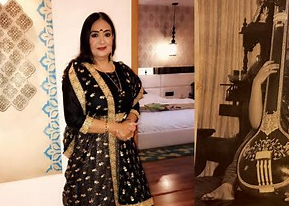
Asha Mishra, a veteran communist leader and women’s rights activist, passed away on 8 May 2026 in Lucknow at the age of 79. She began her career as a teacher and joined the Left movement in Kanpur during her student years. Throughout her career, she held prominent positions in the Communist Party of India and the National Federation of Indian Women (Bharatiya Mahila Federation). Mishra led multiple grassroots protests focused on women’s rights, labor welfare, and social equality across Uttar Pradesh. Chief Minister Yogi Adityanath, Union Minister Pankaj Chaudhary, and MLA Pankaj Singh paid public tributes upon her death.
Profile of Asha Mishra
Early Life and Left Movement Ideology
- Formative Years: She entered public life as an educator and became an active member of student-led Left wings in Kanpur, which was then a primary industrial and trade union hub in North India.
- Political Assignments: She rose through the ranks of the Communist Party of India (CPI) to become a national council member and a member of the state executive committee in Uttar Pradesh.
- Family: She is survived by her husband and two sons, including Pranshu Mishra, who serves as the Resident Editor of the Hindustan Times in Lucknow.
Leadership in Women’s Organizations
- National Federation of Indian Women (NFIW): Known locally as the Bharatiya Mahila Federation, Mishra served this institution in various capacities including national secretary, vice president, state president, and general secretary.
- Grassroots Mobilization: She specialized in organizing rural and working-class women in Uttar Pradesh against domestic violence, economic disparity, and institutional neglect.
Institutional Framework of Associated Organizations
National Federation of Indian Women (NFIW)
The NFIW is a mass organization dedicated to securing women’s rights and is ideologically linked to the communist movement in India.
- Establishment: It was founded in 1954 by several prominent leaders, including Aruna Asaf Ali, to create a national platform for working-class women.
- Core Objectives: The organization works toward securing equal wages, agrarian reforms for women farmers, reservation in legislative bodies, and the elimination of gender-based violence.
- International Affiliation: The NFIW is affiliated with the Women’s International Democratic Federation (WIDF), allowing it to represent Indian working women at global forums.
Communist Party of India (CPI)
The political platform that shaped Mishra’s activism is one of the oldest surviving political parties in the country.
| Organizational Aspect | Historical and Structural Details |
| Foundation Date and Place | 26 December 1925 at Kanpur, Uttar Pradesh |
| Key Founders | M. N. Roy, Abani Mukherji, and Charu Majumdar (early ideologues) |
| Party Symbol | Ears of Corn and Sickle |
| Key Ideology | Marxism-Leninism, Socialism, and Secularism |
| National Status | Recognized as a state party in multiple states, formerly holding national party status |
History of Women’s Rights Activism in Uttar Pradesh
Pre-Independence Phase
- The Kanpur Hub: During the 1920s and 1930s, Kanpur became a center for the labor movement where women mill workers organized strikes demanding maternity benefits and fixed working hours.
- All India Women’s Conference (AIWC): Established in 1927, the AIWC opened multiple branches in United Provinces (now Uttar Pradesh) to promote women’s literacy and legal awareness regarding child marriage.
Post-Independence Legal and Social Reforms
- The Anti-Dowry Movements: The 1970s and 1980s witnessed massive mobilization by organizations like the NFIW against dowry deaths in cities like Lucknow, Kanpur, and Allahabad, forcing police administrations to set up dedicated women’s cells.
- The Chipko Connection: Though originating in the hills of Uttarakhand (then part of Uttar Pradesh), the eco-feminist movement heavily influenced grassroots women activists across the plains of UP to fight for community forest rights.
IASPOINT Booster Facts for UPSC
- First Communist Conference: The first open All India Socialist Periodical Conference was held in Kanpur in December 1925, chaired by Singaravelu Chettiar, where the formal structure of the CPI was adopted on Indian soil.
- Aruna Asaf Ali: The first president of NFIW, Aruna Asaf Ali, is widely remembered for hoisting the Indian National Congress flag at the Gowalia Tank Maidan in Bombay during the Quit India Movement in 1942.
- Begum Aizaz Rasul: A vital figure from Uttar Pradesh, she was the only Muslim woman member of the Constituent Assembly of India and fiercely debated women’s reservation, advocating for an open electoral system instead.
- The United Provinces Pioneering Status: The state of Uttar Pradesh holds the historical distinction of giving India its first female Chief Minister, Sucheta Kripalani (1963–1967), and its first female Governor, Sarojini Naidu (1947–1949).
- Article 39 of the Constitution: This Directive Principle of State Policy mandates that the State direct its policy toward securing equal pay for equal work for both men and women, a core constitutional clause used by Left women’s organizations during legal strikes.