
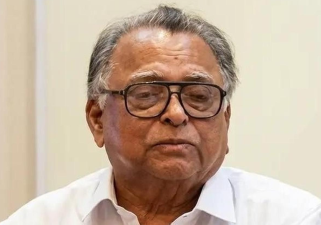
P.J. Alexander, a distinguished former Director General of Police (DGP) of Kerala, passed away on 8 May 2026 in Thiruvananthapuram at the age of 92. Commissioned into the Indian Police Service (IPS) in the early 1960s, Alexander served the state in critical capacities, including as Inspector General (IG) and Crime Inspector General, before retiring in 1994. Beyond active policing, he contributed to public administration as the chairman and managing director of the Kerala State Industrial Development Corporation (KSIDC) and director of the Institute of Management in Government (IMG). His academic background as a Kerala University lecturer and his doctoral research on law enforcement heavily shaped his advocacy for modernization and systemic structural reforms within the Kerala Police.
Evolution of Police Administration in Kerala
Pre-Independence Policing Roots
The modern police structure in Kerala evolved from the merging of different systems in the princely states of Travancore and Cochin, along with the Malabar region of the Madras Presidency.
- Travancore State: The police force was initially organized under the Kavalkars (local guards) system. In 1812, Col. John Munro, the British Resident and Diwan, established the Travancore Police on a formal footing. The system underwent further modernization with the enactment of the Travancore Police Regulation of 1881.
- Cochin State: Organized policing began under Diwan Venkata Subbaiah in 1836. The Cochin Police Act of 1943 later codified the duties and powers of the law enforcement personnel.
- Malabar District: This region followed the Madras District Police Act of 1859, which placed the police directly under the colonial administrative framework.
Post-Independence Integration and the Kerala Police Act
Following the linguistic reorganization of states, the unified state of Kerala was created on 1 November 1956. The Police Integration Act of 1956 consolidated the diverse forces of Travancore-Cochin and Malabar into a single command structure. The state later enacted the Kerala Police Act of 1960 to standardize duties across the territory. To match modern human rights standards and community policing models, the state replaced the old framework with the comprehensive Kerala Police Act of 2011.
Structural Hierarchy and Administrative Wings
Present Administrative Hierarchy
The Kerala Police operates under the Department of Home Affairs, Government of Kerala. The State Police Chief, holding the rank of Director General of Police (DGP), leads the force. The administrative chain of command flows downward to manage territorial and functional jurisdictions:
| Administrative Level | Commanding Officer Rank | Jurisdictional Scope |
| State Headquarters | Director General of Police (DGP) | Statewide administration and policy formulation |
| Police Zones | Additional Director General of Police (ADGP) | Broad geographic divisions (North and South Zones) |
| Police Ranges | Inspector General of Police (IGP) / DIG | Clusters of multiple revenue districts |
| Police Districts | Superintendent of Police (SP) / Commissioner | Matches revenue district boundaries or major cities |
| Police Sub-Divisions | Deputy Superintendent of Police (DySP) / ASP | Clusters of local police stations |
| Police Circles | Inspector of Police | Supervisory jurisdiction over multiple stations |
| Police Station | Station House Officer (SHO) (Inspector/SI) | Primary unit for law enforcement and crime registration |
Specialized Operational Wings
The Kerala Police features specialized wings created to address specific categories of crime and public order challenges:
- State Crime Branch: Investigates complex, inter-district, and grave economic offenses that require advanced forensic and legal analysis.
- State Intelligence: Collects and analyzes intelligence related to national security, public order, and political developments.
- Coastal Police: Established to secure Kerala’s 590-kilometer coastline, operating dedicated coastal police stations in coordination with the Indian Coast Guard.
- Cyberdome: A high-tech public-private partnership center focused on cybersecurity, monitoring the dark net, preventing cyber crimes, and analyzing digital forensics.
Institutional Reforms and Modernization Programs
Janamaithri Suraksha Project
Launched in 2008, the Janamaithri Suraksha Project is Kerala’s flagship community policing initiative. The program alters the traditional police-citizen dynamic by mapping specific beats to designated officers. These beat officers maintain direct communication with local residents, merchants, and residential associations. The project aims to prevent crime through community cooperation, resolve local disputes before they escalate, and build public trust in law enforcement.
Administrative Training Infrastructure
The state relies on specialized institutions to maintain high standards of professionalism and administrative capability:
- Kerala Police Academy (KEPA): Located in Thrissur, this institution serves as the primary training ground for directly recruited sub-inspectors, deputy superintendents, and specialized cadres.
- Institute of Management in Government (IMG): An autonomous body under the state government where senior police executives and civil servants undergo leadership training, public policy analysis, and e-governance orientation.
IASPOINT Booster Facts for UPSC
- First Police Minister of Kerala: C. Achutha Menon handled the Home portfolio in the first democratically elected Kerala Legislative Assembly formed in 1957 under E.M.S. Namboodiripad.
- India’s First All-Women Police Station: Established in Kozhikode, Kerala, in 1973. Prime Minister Indira Gandhi inaugurated the station, which marked a major step forward for gender mainstreaming in Indian law enforcement.
- The Student Police Cadet (SPC) Project: Initiated by the Kerala Police in 2010, this school-based youth development program trains high school students to respect the law, develop civic consciousness, and resist social evils. The Ministry of Home Affairs later adopted this model at the national level.
- Prakash Singh Case (2006): The Supreme Court of India issued seven binding directives to central and state governments to kickstart police reforms. These directives focused on setting up State Security Commissions, establishing Police Establishment Boards, and ensuring fixed tenures for operational chiefs like the DGP.
- Pink Patrol: A specialized unit of the Kerala Police equipped with custom vehicles to specifically handle cases of harassment and ensure the safety of women and children in public spaces.