
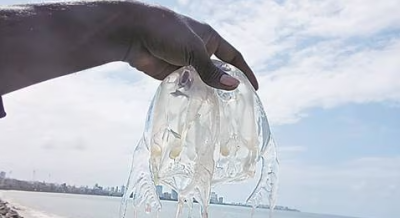
Marine biologists from institutions like the National Institute of Oceanography, Goa, have documented the presence of highly venomous box jellyfish genera, specifically Morbakka and Chironex, along the Indian coastline. Field surveys and molecular analyses confirmed the first-ever record of Morbakka virulenta off Caranzalem beach in Goa, alongside the identification of Chironex indrasaksajiae within the Gulf of Mannar and Palk Bay. India currently hosts seven distinct species of box jellyfish, representing nearly 14 percent of total global cubozoan diversity. Over a five-year monitoring window, authorities recorded four cases of life-threatening envenomation, sparking calls for structured coastal surveillance.
Biological Classification and Core Characteristics
Box jellyfish belong to the class Cubozoa under the phylum Cnidaria. They differ structurally and behaviorally from true jellyfish belonging to the class Scyphozoa.
Anatomical Structure
- Cube-Shaped Medusa: Unlike dome-shaped true jellyfish, cubozoans possess a distinct square or box-like umbrella or bell.
- Pedalia: The tentacles do not arise from the entire rim of the bell. Instead, they hang from specialized fleshy pads called pedalia located at each of the four corners of the square bell.
- Rhopalia: Box jellyfish have true organs called rhopalia, located in niches on the flat surfaces of the bell. Each rhopalium houses complex eyes complete with lenses, corneas, and retinas, enabling them to actively swim toward prey rather than drifting passively.
Venom Mechanism
Cubozoans possess thousands of microscopic stinging capsules called nematocysts along their tentacles. Upon chemical or mechanical contact, these capsules fire venomous barbs into the prey. The venom contains potent cardiotoxins, neurotoxins, and dermatonecrotic components that can cause rapid cardiac arrest, respiratory failure, and severe dermal scarring in humans.
Box Jellyfish Distribution in the Indian Ocean
Field studies have mapped seven distinct cubozoan species in coastal ecosystems, focusing on specific regional clusters.
Goa (Caranzalem Beach)
Taxonomists confirmed the presence of Morbakka virulenta here using morphological analysis and DNA barcoding. This species features a heavy, transparent bell with ribbon-like tentacles and is widely known for causing severe stinging incidents in East Asian waters.
Gulf of Mannar and Palk Bay
Researchers identified Chironex indrasaksajiae in these shallow waters, establishing the first official record of the dangerous Chironex genus in Indian seas. Members of this genus are among the most venomous marine creatures known.
Extra-Regional Habitats
Isolated populations of other cubozoan species occur periodically along the coastlines of Maharashtra, Kerala, and the Andaman and Nicobar Islands, usually driven shoreward by seasonal monsoonal currents.
Species-Specific Matrix and Identification Methods
Accurate identification of Indian box jellyfish relies on combining physical examination with molecular tools to differentiate look-alike species.
| Genus / Species | Primary Indian Habitats | Distinct Physical Features | Clinical Severity |
| Morbakka virulenta | Goa (Caranzalem Beach) | Medium-sized, warts on the bell surface, single tentacle per pedalium. | Severe pain, skin necrosis, systemic shock. |
| Chironex indrasaksajiae | Gulf of Mannar, Palk Bay | Large bell, multiple branching tentacles from each pedalium. | Highly critical; can cause fatal cardiac arrest within minutes. |
| Copula sivickisi | Andaman Islands, Lakshadweep | Small, sticky pads on the bell to attach to marine vegetation at night. | Moderate to severe localized stings. |
Morphological Taxonomy
Scientists examine the structure of the pedalial canal, the shape of the rhopaliar niche ostia, and the distribution of nematocyst warts on the exumbrella to classify specimens.
Molecular Barcoding
Because juvenile stages or damaged specimens can look identical, laboratories extract DNA and sequence the Cytochrome c Oxidase Subunit I (COI) mitochondrial gene to confirm species identity.
Ecological and Public Health Management
The presence of these apex invertebrate predators presents challenges for coastal economies, tourism safety, and marine conservation management.
- Coastal Surveillance: The National Institute of Oceanography emphasizes building long-term observation programs to track seasonal blooms, which often peak during warm pre-monsoon and post-monsoon periods.
- Tourism Safeguards: Popular public beaches require warning signage, specialized stinger nets, and first-aid stations stocked with vinegar, which deactivates undischarged nematocysts.
- Climatic Drivers: Rising sea surface temperatures, agricultural fertilizer runoff, and the depletion of natural fish competitors promote jellyfish population spikes, altering the balance of coastal food webs.
IASPOINT Booster Facts for UPSC
- Class Cubozoa: A specialized group within Phylum Cnidaria. Unlike Scyphozoans, cubozoans can swim rapidly at speeds up to two meters per second and possess a ring of muscle called a velarium that focuses water expelled from the bell.
- Irukandji Syndrome: A systemic, life-threatening condition caused by the sting of certain small box jellyfish, such as Carukia barnesi. Symptoms include severe muscle cramps, violent vomiting, elevated heart rate, and acute hypertension.
- Nematocyst Deactivation: Acetic acid (standard domestic vinegar) is the medically recommended treatment for box jellyfish stings. It chemically disables un-triggered stinging cells, preventing additional venom from entering the bloodstream, though it does not neutralize venom already injected.
- DNA Barcoding: A taxonomic method using a short, standardized genetic sequence—typically the mitochondrial COI gene in animals—to rapidly identify an organism down to the exact species level.