
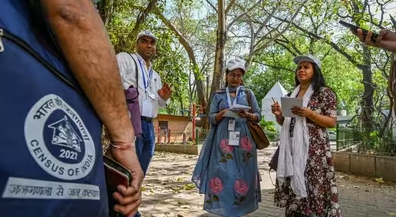
The Census 2027 process in Rajasthan commenced on May 1, 2026, with the launch of a 15-day self-enumeration window that allowed citizens to fill out household details online until May 15, 2026. Rajasthan Governor Haribhau Bagde and Chief Minister Bhajanlal Sharma officially launched the exercise. This state-level rollout transitions into the physical door-to-door enumeration phase running from May 16 to June 14, 2026. The initial phase operates as a core component of India’s 16th national population census, utilizing an upgraded digital architecture to replace traditional paper-based record collection across the state.
Two-Phase Operational Timeline
The national census framework splits the data collection exercise into two clear phases. Rajasthan follows the standard national schedule designed for non-snowbound states.
Phase I: Houselisting and Housing Census (HLO)
- Self-Enumeration Phase: Conducted online between May 1 and May 15, 2026. Residents utilized the dedicated national web portal to input structural and basic domestic data voluntarily.
- Field Enumeration and Verification: Conducted from May 16 to June 14, 2026. A field force of roughly 160,000 trained enumerators and supervisors handles the mandatory door-to-door validation and mapping of all households across Rajasthan.
Phase II: Population Enumeration (PE)
Scheduled to take place nationwide in February 2027. This phase will record individual demographic profiles, literacy rates, economic activities, migration trends, fertility metrics, and comprehensive caste data.
Digital Infrastructure and Security Architecture
The Census 2027 cycle introduces a paperless collection strategy designed to shorten the time required for data processing and public release.
Core Digital Components
- Mobile Enumeration Applications: Field staff use specialized mobile applications to record responses directly. The software features offline data-saving capabilities to manage areas with weak telecom connectivity.
- The CMMS Portal: The Census Management and Monitoring System (CMMS) portal provides an administrative dashboard for senior district and state officers. It tracks real-time progress, identifies slow-moving enumeration blocks, and helps manage field personnel.
- Self-Enumeration Portal: The web address se.census.gov.in allows residents to log in securely via mobile numbers and generation of One-Time Passwords (OTPs). The application generates a unique Self-Enumeration ID (SE ID) upon completion. The resident presents this ID to the field enumerator to skip long manual questioning.
Question Structure
The first phase features a uniform questionnaire consisting of 33 specific questions. These queries gather data on housing structural types, source of drinking water, availability of electricity, sanitation infrastructure, asset ownership, and the gender of the head of the household.
Legal and Administrative Framework
The execution of the census relies on explicit constitutional and statutory mandates that compel public cooperation and protect data privacy.
Constitutional Provisions
Under the Seventh Schedule of the Constitution of India, the census is a Union Subject listed at Serial Number 69. The Central Government holds the exclusive power to legislate and conduct population assessments.
Statutory Backing
- The Census Act, 1948: This statute makes it legally binding for citizens to answer census questions truthfully. It provides the legal authority to appoint census officers and details penalties for non-compliance or false reporting.
- The Census Rules, 1990: These rules provide the administrative framework for managing field operations, state coordination, and data handling protocols.
Data Protection Guarantee
Section 15 of the Census Act, 1948, creates strict confidentiality for individual information. The data collected during the census cannot be used as evidence in a court of law, nor can it be accessed by tax authorities or external administrative bodies. It is utilized solely for generating aggregated statistical tables.
IASPOINT Booster Facts for UPSC
- Historical Timeline: The first systematic, non-synchronous census in India occurred between 1865 and 1872 under Lord Mayo. The first synchronous, country-wide census was conducted in 1881 under Lord Ripon. The 2027 exercise represents the 16th census in Indian history and the 8th since independence.
- Nodal Authority: The Office of the Registrar General and Census Commissioner, India (ORGI), functions under the Ministry of Home Affairs to plan and execute the national census.
- Historical Historical Antecedents: Administrative tracking of populations in India dates back to antiquity, with detailed references found in Kautilya’s Arthashastra (321–296 BC) and Abul Fazl’s Ain-e-Akbari during the reign of Emperor Akbar.
- Language Inclusivity: The digital self-enumeration portal supports 16 scheduled languages to assist diverse regional populations.
- The Census Moment: The standard reference date for the Census 2027 is fixed at 00:00 hours on March 1, 2027, for non-snowbound areas. For snow-bound areas like Ladakh and specific zones of Jammu and Kashmir, Himachal Pradesh, and Uttarakhand, the reference date is fixed at 00:00 hours on October 1, 2026.