
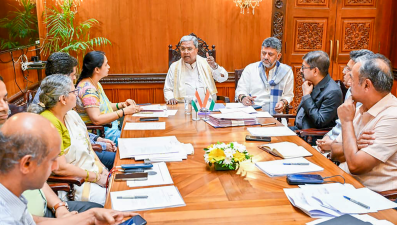
The Karnataka Cabinet approved a 600 crore rupees minority welfare scheme designed to upgrade infrastructure in underdeveloped minority settlements across the state. Operating over a two-year horizon covering the financial years 2026-27 and 2027-28, the initiative seeks to upgrade basic municipal infrastructure in backward pockets. The structural multi-year funding model allows ongoing development works to transition smoothly between consecutive fiscal cycles without experiencing budgetary interruptions. Alongside this intervention, the state cabinet endorsed a series of major multi-sectoral projects, spanning high-speed rail corridors, metropolitan transport networks, primary education welfare kits, and specialized diagnostic healthcare infrastructure.
Scheme Overview and Core Objectives
The special development package operates under the administrative jurisdiction of the Minorities Welfare, Hajj and Waqf Department. It focuses heavily on localized spatial development to counter urban marginalization in identified pockets.
Targeted Localities and Demographics
The program targets the most backward residential areas populated predominantly by notified minority communities. It prioritizes the transformation of under-developed settlements, including registered and unregistered slums located within the limits of eleven major City Corporations across Karnataka. These City Corporations represent large-scale urban local bodies responsible for handling dense civic populations.
Functional Priorities and Infrastructure Sub-components
The 600 crore rupees allocation is dedicated to standardizing critical civic utilities. The physical interventions include:
- Construction, paving, and re-surfacing of internal roads.
- Establishment of covered drainage and liquid waste management systems.
- Installation of energy-efficient street lighting grids.
- Improvement of community sanitation complexes and solid waste management.
- Augmentation of piped drinking water supply lines and public standposts.
Socio-Political Context and Constitutional Debates
The clearance of the funding package triggered sharp debates regarding the limits of targeted welfare planning and legislative equity.
Political Friction and Legal Challenges
The opposition political factions, primarily the Bharatiya Janata Party, challenged the policy stance, characterizing it as a preferential outreach strategy. Critics questioned the legal validity of dedicating state public funds exclusively to geographical areas demarcated by religious demographics. Opponents argue that the targeted spending policy potentially breaches the core principles of Article 14 (Equality before Law) and Article 15 (Prohibition of discrimination on grounds of religion) of the Constitution of India, and announced plans to seek judicial review.
Executive Justification
The state administration defended the dual-year action plan as an objective, long-planned developmental exercise. Officials stated that assigning a rolling budget preventing project stagnation is a standard administrative technique for complex civil works. The executive branch maintained that the action plan addresses verified socio-economic backwardness indices within dense municipal clusters rather than acting as a political tool.
Concurrent Cabinet Approvals
During the same legislative sitting, the Karnataka Cabinet sanctioned several other capital-intensive and social welfare approvals.
| Sector | Approved Project / Initiative | Key Details & Fiscal Outlay |
| Mass Transit | Hyderabad–Bengaluru High-Speed Rail Corridor | Administrative and legislative support for a 607.03 km central rail project; 101.03 km passes through Tumakuru, Chikkaballapur, and Bengaluru Rural. |
| Urban Transport | Greater Bengaluru Integrated Suburban Project | In-principle approval for an 18,133 crore rupees project at Bidadi covering 7,481 acres across nine villages. |
| Social Security | Educational School Kits | 115.84 crore rupees allocation to distribute comprehensive educational kits to children of construction workers (Classes 1 to 12). |
| Healthcare Infrastructure | Diagnostic Upgradation | Procurement of six high-end MRI scanning machines for state-run public hospitals to expand free diagnostic services. |
| Industrial Growth | Bengaluru Signature Business Park | Allotment of 140 acres on a lease-and-sale basis to Applied Materials Inc. for a 780 crore rupees semiconductor R&D facility. |
IASPOINT Booster Facts for UPSC
- Constitutional Provisions for Minorities: The Constitution of India does not explicitly define the term ‘Minority’. Article 29 protects the distinct language, script, or culture of minorities, while Article 30 guarantees the right of minorities—whether based on religion or language—to establish and administer educational institutions.
- National Commission for Minorities (NCM): Set up under the NCM Act of 1992, the body recognizes six religious communities at the national level: Muslims, Christians, Sikhs, Buddhists, Zoroastrians (Parsis), and Jains (notified in 2014).
- Urban Local Bodies (ULBs): City Corporations are governed via the 74th Constitutional Amendment Act of 1992, which institutionalized urban local self-governance through the Twelfth Schedule, listing 18 distinct functional domain items including roads, water supply, and slum improvement.
- Legal Precedents on Target Schemes: In landmark judgments like T.M.A. Pai Foundation v. State of Karnataka, the Supreme Court noted that for the purpose of Article 30, the unit for determining a minority is the State, not the whole of India, as the continuous reorganization of states occurred on linguistic lines.
- Maulana Azad Model Schools: Karnataka has integrated several Maulana Azad Model Schools and Urdu institutions, upgrading them to the standard of Karnataka Public Schools to improve secular and modern educational access among backward minority tracts.