
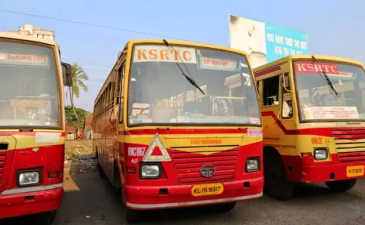
The Kerala State Road Transport Corporation (KSRTC) launched a short-term gender-based ticketing system on May 9, 2026, utilizing updated Electronic Ticketing Machines (ETMs) to categorize passengers as women, men, children, or transgender individuals. This data collection drive concluded within days, allowing KSRTC to analyze commuter trends and remove the gender logging feature by mid-May. The initiative directly supports the newly elected United Democratic Front (UDF) government, which secured a majority by winning 102 out of 140 seats in the 2026 Kerala Assembly elections and subsequently announced free bus travel for women in its first cabinet meeting.
Operational Mechanics and Implementation
Data Collection Drive
The primary objective of the administrative order was to generate precise daily baseline data regarding women commuters. This data helps the state calculate the required financial allocations and subsidy reimbursements before launching the free travel scheme. Preliminary estimates from the logging data revealed that women comprise approximately 49% to 52% of KSRTC’s total daily ridership.
Technical Framework
Conductors used upgraded android-based ETMs to manually enter passenger categories during ticket issuance. While the process provided high-resolution data on commuter demographics, transport staff and unions raised operational concerns regarding the increased time required per ticket during peak commuting hours.
Policy Framework and Socio-Economic Implications
Financial Impact on Public Transit
Gender-focused transport welfare policies require rigorous pre-implementation auditing to ensure fiscal sustainability. KSRTC operates around 3,500 to 4,000 buses daily and bears a substantial overhead for operations, salaries, and pensions. Data indicates that women contribute nearly half of the corporation’s daily ticket revenue, making precise state budgetary compensation essential to prevent further operational losses.
Comparative Analysis of State Transport Welfare Initiatives
Several Indian states have implemented zero-fare transport policies for women to improve labor force participation and spatial mobility.
| State | Scheme / Initiative Name | Implementation Model | Ticket Verification Method |
| Kerala | Indira Guarantee / Free Bus Travel | Applicable to state-owned KSRTC buses; backed by preliminary ETM data profiling. | Standard tickets with gender classification (during data collection stage). |
| Delhi | Free Travel Scheme for Women | State-funded rides across Delhi Transport Corporation (DTC) and cluster buses. | Phasing out manual “Pink Tickets” to transition to digital “Pink Saheli Smart Cards.” |
| Karnataka | Shakti Scheme | Free travel for domicile women in non-luxury state transport buses. | Issuance of zero-fare physical tickets upon showing valid government identity proof. |
IASPOINT Booster Facts for UPSC
Statutory and Institutional Framework of KSRTC
- Legal Origin: KSRTC operates under the provisions of the Road Transport Corporations Act, 1950, which empowers state governments to establish transport corporations for an efficient, adequate, economical, and properly coordinated system of road transport services.
- Administrative Ministry: The corporation functions under the Department of Transport, Government of Kerala.
Constitutive Elements of Gender-Responsive Urban Mobility
- Data-Driven Governance: Utilizing ETM data to frame social welfare schemes aligns with the principles of evidence-based policymaking, minimizing the risk of fiscal miscalculation.
- Economic Outcomes: Providing safe, reliable, and subsidized public transport addresses gender-specific mobility barriers, directly contributing to Sustainable Development Goal 5 (Gender Equality) and Sustainable Development Goal 11 (Sustainable Cities and Communities).
Constitutional and Electoral Context
- Affirmative Action: Subsidized or free transport for specific demographics is protected under Article 15(3) of the Constitution of India, which empowers the State to make special provisions for women and children.
- 2026 Legislative Assembly Details: The 16th Kerala Legislative Assembly election was conducted to elect members across 140 constituencies. The United Democratic Front won 102 seats, displacing the Left Democratic Front, which was reduced to 35 seats.