
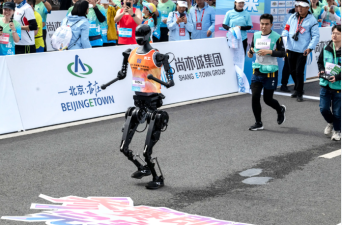
China has showcased a major leap in humanoid robotics and artificial intelligence by fielding more than 100 robots in a half-marathon race in Beijing. The event brought into light rapid progress in machine mobility, balance, speed and coordination. It also reflected China’s wider push to become a global leader in advanced robotics and AI-driven manufacturing.
Race Highlights
The humanoid robots competed on a parallel track with human runners in the Beijing E-Town Half Marathon. The number of participating robots rose sharply from 20 in the previous edition to over 100 this year. The winning robot completed the race in 50 minutes and 26 seconds, a major improvement over last year’s result. In the inaugural edition, most robots struggled to finish the course.
Technological Significance
The race served as a public demonstration of China’s progress in humanoid robotics. It showed improvements in:
- locomotion and stability
- battery and endurance performance
- AI-based navigation and control
- hardware design and mechanical efficiency
The event also underlined the growing role of Chinese firms in developing commercial humanoid robots.
China’s Robotics Strategy
China has been promoting local firms through policy support to strengthen its robotics ecosystem. The country aims to reduce dependence on foreign technology and build domestic capability in next-generation automation. Many practical uses of humanoid robots, however, are still in the testing stage. Potential applications include manufacturing, logistics, public services and disaster response.
Broader Global Context
The Beijing race reflected the intensifying global competition in humanoid robotics. It also demonstrated how robotics is moving beyond laboratories into real-world performance tests. Such events are increasingly being used to measure progress in AI integration, machine learning and robot-human interaction.
Last Modified: April 27, 2026