
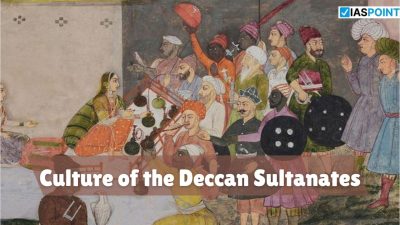
The Deccan Sultanates were five independent Muslim kingdoms in South India. They emerged after the decline of the Bahmani Sultanate in the 16th century. The sultanates included Ahmadnagar, Bidar, Bijapur, Golconda, and Berar. Each contributed to the region’s culture, art, and architecture.
Language Development
The Dakhani language flourished during this period. It evolved from earlier dialects influenced by Arabic, Persian, Marathi, Kannada, and Telugu. Dakhani became a spoken and literary language, later referred to as Dakhani Urdu to distinguish it from North Indian Urdu.
Deccani Miniature Painting
Deccani miniature painting was a major artistic achievement. It thrived in the courts of Ahmadnagar, Bijapur, and Golconda. The paintings often depicted court life, nature, and mythology. They are known for their vibrant colours and intricate details.
Architectural Achievements
The Deccan Sultanates are renowned for their architectural masterpieces. Notable structures include the Charminar in Hyderabad and the Gol Gumbaz in Bijapur. These monuments reflect a blend of Islamic and local architectural styles.
Religious Tolerance
The rulers of the Deccan Sultanates exhibited notable religious tolerance. The Nizam Shahi, Adil Shahi, and Qutb Shahi dynasties employed Hindus in roles. This inclusivity encourageed a diverse cultural environment.
Ahmadnagar Contributions
Ahmadnagar was a centre for miniature painting. The Nizam Shahi kings supported artists, leading to the creation of notable works like the “Tarif-i-Hussain Shahi”. The mausoleum of Ahmad Shah I Bahri and the Jami Mosque are architectural contributions from this period.
Bidar’s Architectural Focus
The Barid Shahi rulers of Bidar focused on garden tombs. The tomb of Ali Barid Shah, built in 1577, is a prime example. Bidar is also known for Bidriware, a unique form of metalwork inlaid with silver and brass.
Bijapur’s Cultural Flourishing
The Adil Shahi dynasty in Bijapur promoted arts and literature. They were known for their religious tolerance, employing Hindus in administrative roles. Architectural marvels include the unfinished Jami Mosque and the Ibrahim Rouza, a tomb complex.
Golconda’s Architectural Innovations
Golconda was known for its fortified city and the Qutb Shahi tombs. The Charminar, built by Muhammad Quli Qutb Shah, is a symbol of Hyderabad. The Mecca Masjid, initiated in 1617, is another structure.
Literary Contributions of Golconda
The Golconda Sultanate advanced the Dakhani language. Muhammad Quli Qutb Shah was a notable poet, writing extensively in Dakhani, Persian, and Telugu. His works often reflected themes of love, nature, and spirituality.
Bijapur’s Literary Scene
The Adil Shahi court was a hub for literary activity. Ibrahim Adil Shah II authored “Kitab-i-Nauras”, a collection of songs in Dakhani. His court hosted poets and musicians, encouraging a vibrant literary culture.
Ahmadnagar’s Artistic Heritage
Ahmadnagar’s contribution to miniature painting is . Early works include illustrations from the “Tarif-i-Hussain Shahi”. The Nizam Shahi period also saw the construction of notable structures like the Kotla complex and Farah Bagh.
Bidar’s Unique Craftsmanship
Bidar is renowned for Bidriware, a unique metalwork technique. This craft involves creating intricate designs on a black metal base. It reflects the artistic heritage of the region and remains a sought-after art form.
Bijapur’s Architectural Grandeur
Bijapur’s architectural landscape is marked by the Gol Gumbaz, a mausoleum with a massive dome. The Adil Shahi rulers commissioned various structures that blend Islamic and local architectural styles, contributing to the region’s grandeur.
Golconda’s Cultural Exchange
The Qutb Shahi dynasty welcomed artists and scholars from Persia and the broader Islamic world. This cultural exchange enriched the artistic and literary traditions of Golconda, leading to a unique fusion of styles.
Deccani Painting Styles
Deccani painting is characterised by its vibrant colours and unique themes. It often features courtly scenes, nature, and mythology. The style is distinct from Mughal painting, focusing more on decorative elements than realism.
Schools of Deccan Painting
Three main schools of painting emerged – Bijapur, Ahmadnagar, and Golconda. Each school reflects the cultural influences of its respective sultanate. Bijapur’s style is baroque, Ahmadnagar’s is emotive, and Golconda’s is diverse and dynamic.
Bijapur School Characteristics
The Bijapur school is known for its rich colours and intricate designs. It combines Persian and South Indian influences. The paintings often depict luxurious court life and are characterised by elaborate jewellery and ornate settings.
Ahmadnagar School Characteristics
The Ahmadnagar school features rare paintings with emotional depth. Influenced by Italian art, it showcases vibrant colours and gold backgrounds. The “Tarif-i-Hussain Shahi” series exemplifies this style, denoting the role of women in its narratives.
Golconda School Characteristics
Golconda’s painting style is eclectic, incorporating influences from various cultures. The artworks exhibit a lively vibrancy and are marked by rhythmic compositions. This school reflects the dynamic cultural landscape of the Qutb Shahi dynasty.
Influence of Deccan Painting
Deccan painting influenced other art forms in India. Mughal artists incorporated elements of Deccan styles into their works. Additionally, the migration of Deccan painters to Rajput courts led to further cultural exchanges.
Legacy of the Deccan Sultanates
The cultural contributions of the Deccan Sultanates have left a lasting impact on Indian art and literature. Their unique blend of influences created a rich cultural tapestry that continues to inspire artists and scholars .
Last Modified: December 23, 2024