
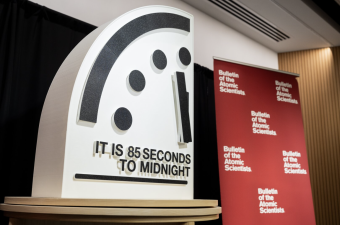
The Bulletin of the Atomic Scientists has moved the Doomsday Clock to 85 seconds before midnight, the closest it has ever been to the symbolic point of global catastrophe. The decision reflects rising concern over nuclear tensions, weakening arms control, conflicts in Ukraine and the Middle East, climate change, and the risks posed by artificial intelligence.
What the Doomsday Clock Represents
The Doomsday Clock was created in 1947 by the Bulletin of the Atomic Scientists, a Chicago-based non-profit founded by scientists including Albert Einstein and J. Robert Oppenheimer. It is a symbolic measure of how near humanity is to self-destruction. Midnight represents global annihilation.
Reasons for the Latest Shift
The scientists cited several worsening threats:
- Growing nuclear rivalry among major powers, especially Russia, China and the United States.
- Continuing war in Ukraine and conflict in the Middle East.
- Fraying nuclear arms control and the expiry of the New START treaty in February.
- Concerns over renewed nuclear testing and proliferation risks.
- Unregulated use of artificial intelligence in military systems and disinformation.
- Persistent climate change risks.
Nuclear and Geopolitical Concerns
The Bulletin warned that diplomatic frameworks are under strain and that the risk of nuclear use remains unacceptably high. It brought into light Russia’s war in Ukraine, tensions on the Korean Peninsula, China’s pressure on Taiwan, and border clashes between India and Pakistan. It also noted the return of explosive nuclear testing as a serious concern after decades of restraint.
AI, Disinformation and Global Risk
The Bulletin also linked modern technology to wider instability. It warned that artificial intelligence could be misused in military systems, biological threats and global disinformation campaigns. The scientists argued that major powers are becoming more aggressive and nationalist, weakening the international cooperation needed to address nuclear danger, climate change and other existential threats.
Last Modified: April 27, 2026