
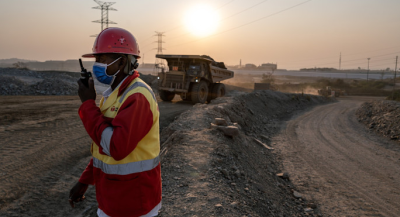
The General Inspectorate of Mines (IGM) of the Democratic Republic of Congo (DRC) launched a specialized paramilitary unit named the “Mining Guard” to secure the nation’s critical mineral extraction sites and supply routes. This specialized force addresses systemic smuggling, institutional corruption, and the influence of armed rebel groups like the M23 in resource-rich provinces. Backed by a $100 million budget, the initiative leverages partnerships with international actors, including the United States and the United Arab Emirates, to stabilize the global critical mineral supply chain. The operational rollout aims to replace irregular military deployments and establish clear mineral traceability across 22 mining provinces.
Structural Architecture of the Mining Guard
The Mining Guard is designed as a centralized, regulated security apparatus operating under the direct supervision of the IGM to clean up the resource extraction ecosystem.
Personnel and Training Timeline
- Initial Cohort: Recruitment begins in May 2026, pulling an initial force of 2,500 to 3,000 personnel.
- Training Program: Recruits undergo six months of intensive physical and legal training from June to December 2026 in collaboration with national military institutions.
- Target Scale: The IGM plans a phased expansion to scale the force to over 20,000 armed guards by the end of 2028.
Phased Geographic Deployment
- Phase 1 (December 2026): Deployment of the first trained cohort to the southeastern Katanga region to secure heavy copper and cobalt production.
- Phase 2 (By end of 2027): Extension of the operational footprint to cover the Grande Orientale and Grand Katanga regions.
- Phase 3 (By end of 2028): Nationwide deployment covering all 22 mining provinces to achieve complete jurisdictional coverage.
Geopolitical Dynamics and Critical Mineral Security
The militarization of mine security in the DRC takes place amid intense international competition over strategic green transition resources.
Global Resource Share of the DRC
The DRC holds a near-monopoly on several minerals required for manufacturing electric vehicles, renewable energy infrastructure, and advanced defense technologies.
| Mineral | Global Output / Reserve Share | Primary Industrial Application |
| Cobalt | ~70% of global production | Lithium-ion battery cathodes, aerospace superalloys |
| Copper | 2nd largest global producer | Electrical grids, EV motors, industrial machinery |
| Coltan (Tantalum) | Top global producer | Capacitors in smartphones, automotive electronics |
| Lithium | Major unexploited hard-rock reserves | Next-generation energy storage systems |
Great Power Competition: US vs. China
Chinese state-owned enterprises currently hold a dominant position in the DRC’s industrial mining concessions. To counter this dominance, the US signed a strategic economic partnership with Kinshasa, providing preferential access to mining projects for Western companies. This includes agreements like the commercial transition of the Chemaf copper-cobalt assets to the US firm Virtus Minerals.
The Gulf Capital Footprint
The UAE has expanded its presence in the African mineral value chain. Beyond investments in security frameworks, Gulf capital is routed through strategic partnerships, such as a joint venture with Mercuria Energy Group to market Congolese copper directly to Saudi Arabia and the UAE.
Challenges in Resource Governance and Mineral Security
Relying solely on armed forces faces major structural challenges due to weak legal frameworks, local corruption, and human rights violations.
Formalizing Security Roles
The national mining code prohibits conventional military and presidential guard units from entering production zones. Despite this law, irregular military personnel frequently control artisanal extraction sites. The Mining Guard aims to replace these fragmented, informal security entities with a single, legally accountable force.
Supply Chain Traceability vs. Smuggling
Illicit mineral trafficking across the eastern borders deprives the state of tax revenue and funds armed rebel groups. While the Mining Guard focuses on securing transit routes, true traceability requires reliable digital certifications, transparent customs enforcement, and independent audits at processing facilities.
Community Rights and Artisanal Mining
Millions of Congolese depend on informal, manual artisanal mining (creuseurs). Increased militarization presents a high risk of escalating conflicts with local populations if executed without community consent, fair labor formalization, and strict adherence to human rights standards.
Resource Governance Reforms
True stabilization of the Congolese resource sector requires deep legal and institutional changes alongside physical security measures.
Contract Transparency
Executing transparent bidding and disclosing corporate mining contracts helps prevent underpriced asset transfers and limits elite corruption.
Revenue Sharing and Local Benefit
Directing mineral royalties to provincial governments and local community trusts helps reduce local grievances and lowers the appeal of illegal smuggling networks.
Environmental and Social Impact Monitoring
Enforcing strict environmental reclamation codes and banning child labor in artisanal pits ensures that corporate supply chains comply with international responsible sourcing standards.
IASPOINT Booster Facts for UPSC
- The Dodd-Frank Act (Section 1502): A US federal law that requires publicly traded companies to audit their supply chains and verify whether tin, tungsten, tantalum, and gold (3TG) originate from conflict zones in the DRC or adjoining nations.
- OECD Due Diligence Guidance: The international benchmark for responsible mineral sourcing, helping companies avoid contributing to human rights abuses or conflict financing.
- Artisanal and Small-Scale Mining (ASM): ASM accounts for nearly 20% of the DRC’s total cobalt output, functioning as a highly volatile, labor-intensive sector prone to security exploitation.
- M23 Rebel Group: A rebel military faction operating primarily in the eastern North Kivu province, whose activities are heavily funded by the illegal extraction and trafficking of coltan and gold.
- General Inspectorate of Mines (IGM): The primary regulatory and enforcement body under the DRC Ministry of Mines, tasked with conducting technical audits and fighting financial fraud in the extraction sector.