
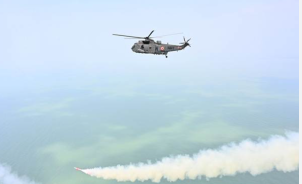
The Defence Research and Development Organisation (DRDO) and the Indian Navy conducted the maiden salvo launch of the Naval Anti-ship Missile–Short Range (NASM-SR) on 29 April 2026. Two missiles were fired in quick succession from a Sea King 42B helicopter off the Bay of Bengal coast in Odisha.
NASM-SR: Basic Profile
NASM-SR stands for Naval Anti-ship Missile–Short Range. It is India’s first indigenous air-launched anti-ship missile. Research Centre Imarat, Hyderabad, developed the missile with other DRDO laboratories and Indian industries.
Salvo Launch and Waterline Hit
A salvo launch refers to the firing of two or more missiles in quick succession from the same or different platforms. The trial also validated the waterline hit capability, which means striking a target vessel at or near the waterline.
Propulsion and Guidance Features
The missile uses a solid propulsion booster and a long-burn sustainer. Its indigenously developed subsystems include a seeker, integrated avionics, and a fibre-optic gyroscope-based inertial navigation system.
Test Range and Tracking Systems
The Integrated Test Range at Chandipur captured the launch data. The range used radar, electro-optical systems, and telemetry for tracking and measurement during the trial.
Operational Context
Anti-ship missiles are designed to strike surface vessels at sea. Air-launched anti-ship missiles are carried by aircraft or helicopters and can extend the strike reach of naval forces. Defence Minister Rajnath Singh congratulated the DRDO, the Indian Navy, the Indian Air Force, and industry partners. The NASM-SR trial took place off the Odisha coast in the Bay of Bengal.
Last Modified: April 30, 2026