
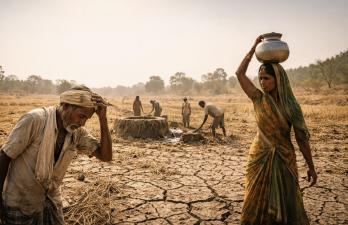
Recent reports show an unusually early heatwave in northern and western India during February 2026. Temperatures soared 8 to 13 degrees Celsius above normal. This rare early warmth affected states like Himachal Pradesh, Jammu and Kashmir, and Ladakh. The India Meteorological Department (IMD) forecasted above-normal temperatures and heatwave days in March, which were confirmed in the first week itself. This early heatwave is linked to a notably dry winter with deficient rainfall and snowfall.
Unusual Temperature Rise and Heatwaves
February 2026 saw temperatures far above the seasonal average in many parts of India. Regions like Shimla recorded temperatures exceeding 25°C, unusual for this time of year. Normally, summer peaks in May or June in these areas. The heatwave conditions were intensified by the absence of typical winter rainfall and snow. Western disturbances, which usually bring winter rain, were less frequent, causing dry soil and faster warming.
Role of Western Disturbances and Dry Winter
Western disturbances are wind systems that bring moisture from the Mediterranean Sea to northern India, causing winter rains and snowfall. Since November 2025, these disturbances were weak or absent, resulting in the third driest February since 1901. January and February rainfall was 60% below normal nationwide. The lack of moisture reduced soil dampness, causing heat to build up quickly in early 2026.
Impact on Agriculture and Water Resources
The early heat and dry conditions pose a threat to rabi crops like wheat, mustard, gram, and vegetables such as potatoes and apples. Crops require more irrigation to survive the heat, which increases pressure on already stressed water resources. Farmers have been advised to irrigate frequently to maintain soil moisture, but this could worsen water scarcity in some regions.
Forecast and Weather Patterns
IMD officials expect the heatwave to persist for a few more days in affected areas. An incoming western disturbance is predicted to bring relief by lowering temperatures and possibly causing rainfall. However, the overall trend points to warmer winters and early summers becoming more common due to changing weather patterns and climate variability.
Topics for Prelims:
Western Disturbances
- Originates near the Mediterranean Sea and Iran.
- Brings winter rain and snow to northern India.
- Moves eastward across the Himalayas.
- Essential for winter precipitation in north India.
- Influences soil moisture and crop cycles.
Heatwave and Temperature Anomalies
- Heatwave – Temperatures 8-13°C above normal in Feb 2026.
- Rare early heatwave in northern India.
- Shimla’s March temperature above 25°C unusual.
- Linked to dry soil and lack of winter rains.
- IMD issues heatwave warnings for March.
Rabi Crops and Irrigation
- Rabi crops – wheat, mustard, gram, groundnut, vegetables.
- Heat stress affects crop growth and yield.
- Increased irrigation advised to maintain soil moisture.
- Water resources face additional stress.
- Early heatwaves disrupt normal agricultural cycles.
Questions for Mains:
- Analyse the impact of western disturbances on India’s winter climate and agriculture, taking example of the 2026 dry winter scenario. [GS-I-World & Physical Geography]
- Discuss in the light of climate variability how early heatwaves affect food security and water resources in India. [GS-III-Economic Development]
- Critically discuss the role of meteorological forecasting in managing agricultural risks during abnormal weather events like early heatwaves and dry winters. [GS-III-Science & Technology]
- Examine the implications of changing winter rainfall patterns on the Himalayan ecosystem and downstream river systems, with examples from recent years. [GS-I-World & Physical Geography]
Answer Hints:
1. Analyse the impact of western disturbances on India’s winter climate and agriculture, taking example of the 2026 dry winter scenario. [GS-I-World & Physical Geography]
- Western disturbances originate near the Mediterranean Sea and Iran, moving eastward bringing winter rain and snow to northern India.
- They are crucial for maintaining soil moisture and supporting rabi crop growth by providing winter precipitation.
- In 2026, lack of adequate western disturbances caused the third driest February since 1901, with 60% below normal rainfall.
- Dry winter led to reduced soil moisture, causing early heatwaves and stressing crops like wheat, mustard, and gram.
- Agricultural productivity is affected due to heat stress and insufficient winter rains, impacting food security.
- Absence of western disturbances also affects snowfall in Himalayas, influencing water availability downstream.
2. Discuss in the light of climate variability how early heatwaves affect food security and water resources in India. [GS-III-Economic Development]
- Early heatwaves cause sudden temperature spikes, damaging standing rabi crops such as wheat, mustard, and vegetables.
- Heat stress reduces crop yields, threatening food security and farmer incomes.
- Dry soil conditions from deficient winter rainfall accelerate warming and worsen heatwave intensity.
- Increased irrigation is required to maintain soil moisture, intensifying pressure on scarce water resources.
- Water scarcity can lead to conflicts and reduce availability for other sectors like drinking water and industry.
- Climate variability increases frequency and unpredictability of such events, complicating agricultural planning.
3. Critically discuss the role of meteorological forecasting in managing agricultural risks during abnormal weather events like early heatwaves and dry winters. [GS-III-Science & Technology]
- Meteorological forecasting provides early warnings of heatwaves and dry spells, enabling proactive measures by farmers and authorities.
- IMD’s forecasts for above-normal temperatures and heatwave alerts in 2026 helped prepare for early heat stress on crops.
- Forecasts facilitate timely advisories on irrigation scheduling, crop protection, and water resource management.
- Limitations include forecast accuracy, lead time, and dissemination challenges in rural areas.
- Integration with agri-extension services and technology (mobile alerts, apps) improves risk mitigation.
- Continuous improvement in forecasting models is essential to handle increasing climate variability and extreme events.
4. Examine the implications of changing winter rainfall patterns on the Himalayan ecosystem and downstream river systems, with examples from recent years. [GS-I-World & Physical Geography]
- Winter rainfall and snowfall from western disturbances replenish Himalayan glaciers and snowpack, critical for ecosystem balance.
- Changing patterns, such as deficient winter precipitation in 2025-26, reduce snow cover, affecting glacier health and water storage.
- Reduced snow and rainfall alter river flows, impacting perennial rivers like Indus, Ganga, and Brahmaputra downstream.
- Lower river discharge affects agriculture, hydropower, and drinking water availability in plains.
- Himalayan biodiversity and forest ecosystems depend on consistent moisture; changes can disrupt flora and fauna.
- Recent years show increased variability, with implications for disaster risks like floods and droughts in the region.