
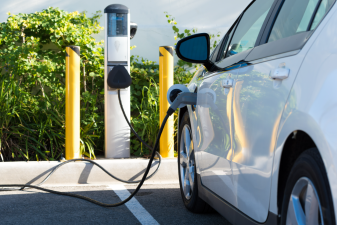
The International Energy Agency (IEA) projects that global electric vehicle (EV) sales will reach 23 million units by 2026, making up 28% of total new car sales worldwide. This projection follows a strong performance in 2025, when global EV sales surpassed 20 million units. China continues to lead the market through its manufacturing capacity, while Europe maintains high adoption rates driven by strict emission regulations. India is experiencing steady growth, recording a 75% increase in EV sales in 2025. Although early 2026 sales showed a temporary slowdown, declining battery costs and expanding charging networks support long-term global adoption.
Global Market Dynamics and Regional Leadership
The expansion of the global EV market relies on three primary regions: China, Europe, and the United States. These markets account for the vast majority of global sales due to mature supply chains and established policy frameworks.
China’s Manufacturing Dominance
China remains the largest EV market and producer globally. The country controls over 60% of global electric car sales. This position is supported by deep vertical integration in battery supply chains, local access to refined critical minerals, and substantial domestic demand. Chinese manufacturers routinely export low-cost models to Europe, Southeast Asia, and Latin America.
Europe’s Regulatory Drivers
Europe holds the second-largest share of the global EV market. Growth in this region is driven by strict fleet-wide carbon dioxide emission targets set by the European Union. Several European nations have also established binding timelines to phase out the sale of new internal combustion engine (ICE) vehicles by 2035, forcing automakers to prioritize electric powertrains.
United States Policy Framework
The US market is expanding due to fiscal incentives under the Inflation Reduction Act (IRA). The law provides tax credits for consumers buying EVs, provided the vehicles and their battery components meet specific domestic sourcing and assembly criteria. This policy aims to reduce reliance on foreign supply chains and build a domestic manufacturing base.
Emerging Markets and India’s Position
EV adoption is accelerating in emerging economies, though it starts from a lower baseline.
- India: Registered a 75% year-on-year sales growth in 2025. This surge is led by electric two-wheelers and three-wheelers, which are more affordable and suited for urban transport. Three-wheeler fleet electrification is growing rapidly due to lower operating costs for commercial operators.
- Africa: EV adoption remains small due to limited grid infrastructure and lower purchasing power. However, localized assembly of electric motorcycles and e-buses is expanding in countries like Kenya, Rwanda, and South Africa to counter rising fuel import costs.
Core Technological and Economic Drivers
Several technological and market factors help sustain the shift toward electric mobility despite near-term economic fluctuations.
Declining Battery Costs
Battery packs represent the largest single cost component of an electric vehicle. The market is seeing a steady drop in the price per kilowatt-hour (kWh) of lithium-ion battery packs. This trend is driven by economies of scale and the adoption of cheaper chemistry alternatives, such as Lithium Iron Phosphate (LFP), which do not require expensive cobalt and nickel.
Expansion of Public Charging Infrastructure
Range anxiety remains a major barrier to consumer adoption. Governments and private entities are investing in high-power Direct Current (DC) fast-charging stations along major highway corridors. Increased grid integration and smart-charging software help manage the electricity load during peak hours.
Comparative Global Market Metrics
| Region / Parameter | EV Market Share (Projected 2026) | Primary Growth Driver | Dominant Vehicle Segment |
| China | Over 45% | Supply chain integration and low-cost manufacturing | Compact cars and SUVs |
| Europe | Approx. 30% | Strict CO2 emission mandates and 2035 ICE ban | Premium cars and hatchbacks |
| United States | Approx. 15% | Inflation Reduction Act (IRA) tax credits | Pick-up trucks and large SUVs |
| India | Approx. 5-7% | FAME subsidies and low operating costs | Two-wheelers and Three-wheelers |
| Rest of the World | Under 5% | Urban transit electrification pilots | Two-wheelers and public buses |
Supply Chain and Environmental Challenges
The rapid scaling of EV production creates geopolitical and environmental pressures that require careful policy management.
Critical Mineral Bottlenecks
Producing EV batteries requires a steady supply of critical raw materials, including lithium, nickel, cobalt, manganese, and graphite. Mining and refining these minerals are geographically concentrated in a few nations. For instance, the Democratic Republic of the Congo produces most of the world’s cobalt, while China processes the majority of global battery-grade graphite and lithium. This concentration exposes the industry to supply disruptions and price volatility.
Grid Capacity and Clean Energy Integration
An increasing number of EVs places higher demands on local electrical grids. If the power grids rely on coal or natural gas for electricity generation, the net environmental benefits of EVs drop. Nations are working to couple EV charging infrastructure with renewable energy sources like solar and wind power to ensure true zero-emission mobility.
IASPOINT Booster Facts for UPSC
- International Energy Agency (IEA): An intergovernmental organization established in 1974 in the wake of the 1973 oil crisis. It is headquartered in Paris, France, and operates within the economic framework of the Organisation for Economic Co-operation and Development (OECD).
- FAME India Scheme: The Faster Adoption and Manufacturing of (Hybrid &) Electric Vehicles in India scheme is the flagship initiative of the Ministry of Heavy Industries to promote electric mobility by offering demand incentives for EV purchases and charging infrastructure setup.
- LFP vs NMC Batteries: Lithium Iron Phosphate (LFP) batteries offer better thermal stability, longer cycle life, and lower production costs because they avoid cobalt. Nickel Manganese Cobalt (NMC) batteries offer higher energy density, providing a longer driving range per charge but at a higher cost.
- Solid-State Batteries: An emerging battery technology that replaces the liquid or gel electrolyte found in current lithium-ion batteries with a solid conductive material. This change promises higher energy density, faster charging times, and reduced fire risks.
- Critical Minerals Club: An international policy concept where consumer nations form alliances to secure, diversify, and stabilize supply chains for battery minerals, reducing dependence on single-country monopolies.