
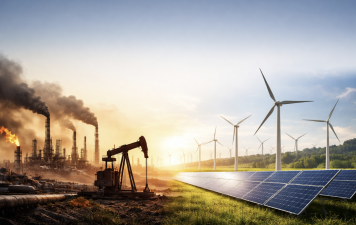
The ongoing geopolitical tensions in West Asia, especially the U.S.-Israel-Iran conflict, have brought into light the risks of heavy reliance on fossil fuels. The closure of the Strait of Hormuz has disrupted oil supplies, affecting countries like India that import nearly 60% of their crude oil from the region. This crisis exposes the vulnerabilities tied to fossil fuel dependency and accelerates the need for a shift towards renewable energy sources.
Impact of Fossil Fuel Dependency on National Security
Fossil fuel reliance compromises national security and sovereignty. Supply disruptions due to conflicts or blockades can cripple economies. India’s forced refinery shutdowns show how dependent nations are vulnerable. Abandoning coal or domestic gas without alternatives risks industrial collapse. Fossil fuels have historically built strategic reserves, but this dependency now causes subservience to volatile regions.
Renewables and Critical Mineral Challenges
Renewables reduce energy supply risks linked to fuel blockades as solar and wind depend on natural elements like sunlight and wind. However, they require critical minerals such as lithium, cobalt, and rare earth elements. These minerals’ supply chains are concentrated, with China dominating processing. Blockades or trade restrictions on minerals could disrupt renewable energy infrastructure, posing new strategic challenges.
Economic Factors Influencing Energy Transition
War-driven oil price spikes shorten renewable energy payback periods, making investments more attractive. Without such shocks, governments prioritise fiscal caution, slowing renewable adoption. Stable oil prices make fossil fuels economically appealing, delaying transition efforts. For countries like India, stable oil and domestic coal allow a gradual shift while renewables infrastructure develops.
Ethical and Strategic Dimensions of Energy Choices
Fear of supply disruptions is used to push renewable adoption, but lasting change depends on ethical commitments to environmental sustainability. Public scrutiny of mineral mining conditions grows when oil prices fall, denoting human rights and environmental concerns. The virtue of renewables lies in planet preservation rather than short-term economic gains.
Topics for Prelims:
Fossil Fuel Dependency
- Major source of energy globally since Industrial Revolution.
- Linked to geopolitical conflicts and supply vulnerabilities.
- India imports 60% of crude oil from West Asia.
- Strait of Hormuz is a critical oil shipping route.
- Disruptions can force refinery shutdowns and economic stress.
Renewable Energy and Critical Minerals
- Renewables include solar, wind, hydro, and bioenergy.
- Require minerals like lithium, cobalt, rare earths for infrastructure.
- China processes 60% of lithium, 70% cobalt, 90% rare earths globally.
- Mineral supply chains are strategic and vulnerable to blockades.
- Renewables operate independently of fuel supply once installed.
Energy Economics and Geopolitics
- Oil price spikes encourage renewable investments.
- Stable fossil fuel prices delay energy transition.
- War and conflicts affect global energy security.
- Energy sovereignty is linked to economic and strategic autonomy.
- India balances coal, gas, and renewables for industrial growth.
Questions for Mains:
- Discuss in the light of recent geopolitical conflicts how fossil fuel dependency affects national security and economic stability. [GS-III-Economic Development]
- Critically examine the challenges posed by critical mineral supply chains in the global renewable energy transition. [GS-III-Science & Technology]
- Explain the role of energy economics in shaping national policies on fossil fuels and renewables, with suitable examples from India and global contexts. [GS-II-Governance]
- With suitable examples, discuss the ethical considerations in adopting renewable energy technologies in the context of environmental sustainability and human rights. [GS-IV-Ethics, Integrity and Aptitude]
Answer Hints:
1. Discuss in the light of recent geopolitical conflicts how fossil fuel dependency affects national security and economic stability. [GS-III-Economic Development]
- Fossil fuel dependency creates vulnerability to geopolitical conflicts, e.g., West Asia tensions disrupting oil supply through Strait of Hormuz.
- India imports nearly 60% of its crude oil from West Asia, making its economy hostage to regional instability.
- Supply disruptions force refinery shutdowns (force majeure), causing industrial and economic stress.
- Dependency undermines national sovereignty, forcing countries into subservience and higher energy costs.
- Sudden loss of fossil fuel supply risks industrial collapse if alternative energy infrastructure is insufficient.
- Historical reliance on fossil fuels built strategic reserves in the West, but developing nations face challenges replicating this while transitioning.
2. Critically examine the challenges posed by critical mineral supply chains in the global renewable energy transition. [GS-III-Science & Technology]
- Renewables depend on critical minerals like lithium, cobalt, and rare earth elements for infrastructure (solar panels, wind turbines, batteries).
- Supply chains are highly concentrated – China processes ~60% lithium, 70% cobalt, 90% rare earths globally.
- Concentration creates geopolitical risks similar to fossil fuel dependencies, including potential blockades or trade restrictions.
- Mining of these minerals raises environmental and human rights concerns, complicating sustainable transition.
- Renewables, once installed, operate independently of fuel supply, but initial mineral supply bottlenecks pose strategic challenges.
- Potential for new geopolitical conflicts over mineral resources and processing hubs as energy transition accelerates.
3. Explain the role of energy economics in shaping national policies on fossil fuels and renewables, with suitable examples from India and global contexts. [GS-II-Governance]
- High fossil fuel prices (due to war or conflict) shorten renewable energy payback periods, incentivizing investments.
- When oil/gas prices are low or stable, governments prioritize fiscal caution, delaying renewable adoption (seen in many countries including India).
- India balances domestic coal and imported fossil fuels to sustain industrial growth while developing renewables gradually.
- War-driven price spikes (e.g., West Asia conflict) force accelerated renewable investments due to energy security concerns.
- Global examples – Western countries with strategic reserves can afford faster transition; developing countries face trade-offs between growth and clean energy.
- Energy sovereignty considerations influence policy decisions, balancing economic growth, environmental goals, and geopolitical risks.
4. With suitable examples, discuss the ethical considerations in adopting renewable energy technologies in the context of environmental sustainability and human rights. [GS-IV-Ethics, Integrity and Aptitude]
- Renewables reduce carbon emissions, addressing climate change and environmental sustainability.
- Mining of critical minerals often involves environmental degradation and human rights abuses (e.g., cobalt mining in Congo).
- Ethical adoption requires addressing supply chain transparency, fair labor practices, and minimizing ecological harm.
- Public scrutiny of mineral mining intensifies when fossil fuel prices are low, denoting ethical dilemmas in energy choices.
- Long-term planetary preservation should guide renewable policies beyond short-term economic or geopolitical gains.
- Examples – India’s gradual renewable adoption balancing development needs and environmental ethics; global calls for responsible sourcing of minerals.