
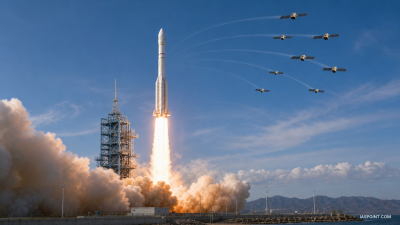
On 22 July 2026 China launched the Gravity‑1 solid‑fuel carrier rocket from a maritime platform in the East China Sea, inserting nine satellites into their designated orbits.
Gravity-1: platform and record
- Developer: Orienspace, private Chinese commercial launch company.
- Claimed capability: Described by the developer as the world’s most powerful solid‑fuel rocket.
- Flight history: Third successful flight; earlier flights in January 2024 and October 2025.
- Launch details: Sea launch east of Shanghai at 10:54 a.m. Beijing time.
Payload and applications
- Satellites: Dongpo‑13, Dongpo‑14, Dongpo‑17, Dongpo‑18, Dongpo‑19, Dongpo‑20, Xiguang‑2 01, Tianyi‑49, Lilac‑3 (Zidingxiang‑3).
- Dongpo series: All‑weather, all‑time Earth observation satellites.
- Xiguang‑2 01 & Tianyi‑49: Remote sensing for mineral exploration, agriculture, forestry, environmental monitoring and urban planning.
Solid‑fuel rockets: technical notes
- Propellant: Fuel and oxidiser cast as a solid grain that burns along its surface.
- Performance traits: Simpler feed and storage systems than liquids; limited throttle and restart capability.
- Typical roles: Military, rapid‑response and some commercial small‑to‑medium launchers.
Maritime launches & commercial context
- Sea platforms: Provide over‑water downrange corridors for stage drop and debris management.
- Industry trend: Increasing use of far‑sea launches by private Chinese carriers.
IASPOINT Booster Facts
- Roadmap: Orienspace developing larger liquid‑fuel vehicles Gravity‑2 and Gravity‑3.
- Regulatory note: Commercial sea launches operate under national space regulations and maritime safety protocols.