
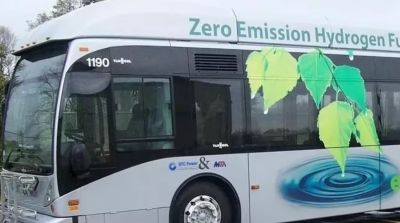
The Delhi Metro Rail Corporation launched hydrogen-powered shuttle bus services in the Central Vista area of Delhi on 15 May 2026. This service connects the Central Secretariat and Seva Teerth Metro stations to improve last-mile connectivity for government offices. Indian Oil Corporation Limited supplied the two 35-seater buses and provides the hydrogen fuel and drivers, while the Delhi Metro Rail Corporation manages daily operations. Operating on weekdays, the service uses National Common Mobility Cards, Unified Payments Interface, and cash for fare payments. This initiative introduces zero-emission public transit to reduce urban air pollution.
Operational Framework of the Central Vista Service
The pilot project establishes a structured route and schedule to serve commuters in the high-security union government district.
Route and Scheduling
The service utilizes two buses running in opposite directions to maintain a continuous loop. One bus operates clockwise and the other anticlockwise, maintaining a 30-minute frequency. The daily operations are split into peak office hours:
- Morning Session: 8:30 am to 12:30 pm.
- Evening Session: 3:30 pm to 6:30 pm.
- Availability: Weekdays only, excluding gazetted holidays.
Fare Structure and Ticketing Integration
Fares are set between ten and fifteen rupees based on the travel distance. Commuters can pay using cash, the Unified Payments Interface, or the National Common Mobility Card. This integration allows passengers to use a single card across the metro network and the hydrogen shuttle buses.
Vehicle Safety and Monitoring
Each bus accommodates 35 passengers and contains integrated Global Positioning System modules for real-time tracking. Closed-Circuit Television cameras are installed inside the vehicles to ensure passenger security and monitor operational safety.
Technology Behind Hydrogen Fuel Cell Vehicles
Hydrogen fuel cell vehicles represent a shift from internal combustion engines to electrochemical energy conversion.
Mechanism of Power Generation
Unlike conventional vehicles that burn fuel, a Fuel Cell Electric Vehicle mixes hydrogen gas with oxygen from the air inside a fuel cell stack. An electrochemical reaction extracts electrons from the hydrogen molecules, generating electricity to power an electric motor. The only byproduct of this chemical process is pure water vapor, eliminating tailpipe pollutants like carbon monoxide, nitrogen oxides, and particulate matter.
Efficiency and Fueling Advantages
Fuel cell systems offer distinct operational benefits over battery electric vehicles for heavy public transit.
| Parameter | Fuel Cell Electric Vehicle (Hydrogen) | Battery Electric Vehicle (Lithium-Ion) |
| Energy Storage | Compressed Hydrogen Tanks | Chemical Battery Packs |
| Refueling/Charging Time | 10 to 15 minutes | 2 to 6 hours (Fast charging) |
| Operational Range | 400 to 600 kilometers | 150 to 250 kilometers (Heavy loads) |
| Weight Impact | Light storage tanks preserve payload capacity | Heavy battery packs reduce maximum passenger capacity |
| Primary Byproduct | Water vapor (H2O) | Heat dissipation |
National Framework for Hydrogen Adoption
The deployment of hydrogen buses in Delhi aligns with broader national policies aimed at transforming India’s energy landscape and reducing crude oil imports.
National Green Hydrogen Mission
Launched by the Union Government, this mission aims to make India a global hub for the production, usage, and export of green hydrogen. The target is to develop a green hydrogen production capacity of at least 5 million metric tonnes per annum by 2030. The transport sector serves as a primary avenue for substituting fossil fuels with clean hydrogen derivatives.
Decarbonization of Public Transit
Urban centers face severe air quality challenges due to vehicular emissions. Introducing hydrogen fuel cell buses into state transport undertakings helps municipal bodies lower their carbon footprint. The high energy density of hydrogen makes it viable for commercial fleets, intercity buses, and heavy-duty trucks where battery weight restricts operational efficiency.
IASPOINT Booster Facts for UPSC
- National Common Mobility Card: An inter-operable transport card conceived by the Ministry of Housing and Urban Affairs that enables passengers to pay for metro, bus, suburban rail, and parking services across India.
- Types of Hydrogen: Hydrogen is classified by its production method. Brown hydrogen comes from coal gasification; Grey hydrogen is produced from natural gas via steam methane reforming; Blue hydrogen captures the resulting carbon emissions; Green hydrogen is produced via water electrolysis using renewable energy.
- First Hydrogen Bus Trial: Indian Oil Corporation Limited previously initiated India’s first operational trial of a green hydrogen fuel cell bus in Delhi-NCR in September 2023, sourcing hydrogen from its Faridabad research and development center.
- Ministry of New and Renewable Energy: This ministry acts as the nodal agency for implementing the National Green Hydrogen Mission, coordinating budgetary allocations across transport, steel, and shipping sectors.
- Electrolyzer Efficiency: A core technological focus of India’s hydrogen policy is driving down the cost of electrolyzers, which use electricity to split water into hydrogen and oxygen.