
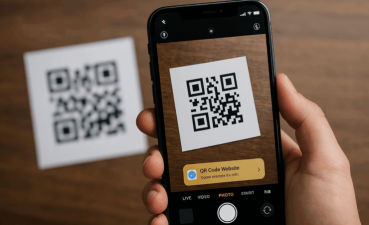
The Office of the Registrar General and Census Operations implemented a Quick Response (QR) code-based verification system for the Municipal Corporation of Delhi (MCD) area to secure door-to-door data collection starting 16 May 2026. This security framework addresses growing concerns over cyber fraud, digital arrests, and doorstep impersonation scams. Each deployed enumerator and supervisor carries official appointment letters and identity cards embedded with encrypted QR codes. Residents can scan these codes to instantly verify the authenticity of the personnel against official records before sharing household information, marking a digital milestone in India’s decennial census methodology.
Core Pillars of the Digital Census Framework
The transition from traditional paper-based methods to a technology-driven structure involves several electronic verification layers.
QR Code Deployment and Validation
- Authentication Mechanism: Charge officers issue QR-coded identity cards and appointment letters to the field staff.
- Citizen Protection: Residents utilize standard smartphones to scan the embedded code, which fetches live data from the official census server to validate the worker’s credentials.
- Data Security: Census workers are legally prohibited from collecting bank details, Permanent Account Number (PAN) cards, or Unified Payments Interface (UPI) passwords.
Multi-Phase Census Timeline
The national census operations follow a structured schedule divided into two operational segments:
- Phase I (Houselisting and Housing Census): This phase runs between April and September across various states. For the 250 wards under the Municipal Corporation of Delhi, the door-to-door Houselisting Operations (HLO) are scheduled from 16 May to 14 June 2026.
- Phase II (Population Enumeration): The actual head-count and detailed demographic profiling, including the collection of caste data, is scheduled for February 2027.
Self-Enumeration Progress and Block Mapping
The introduction of a voluntary digital self-enumeration portal allows citizens to submit details directly before field visits commence.
Statistical Participation in Delhi
During the self-enumeration window that concluded on 15 May 2026, Delhi recorded a total of 93,521 electronic submissions. This included 77,372 fully completed forms and 16,149 initiated cases, achieving an overall completion rate of 82.73 percent.
| Delhi District Division | Total Registered Self-Enumerations | Completed Cases Verified | Operational Context |
| North East | 16,146 | 13,612 | Highest volume district; matches high-density populations from 2011 baseline data. |
| South West | 15,086 | 12,642 | High volume zone with steady response trends. |
| North West | 14,775 | 12,257 | Dense urban area showing active digital participation. |
| Outer North | 545 | 475 | Lowest total volume but achieved the highest completion rate at 87.16%. |
| New Delhi | 6,912 | 5,199 | Recorded the lowest completion rate at 75.22%. |
Houselisting Block (HLB) Integration
The field validation process resolves geographic data mismatches using localized mapping software:
- Geo-Tagging Resolution: If a household experiences GPS errors while self-enumerating, the system allows them to tag an approximate nearby point.
- Map Synchronization: Field enumerators download localized maps of their assigned Houselisting Block (HLB) along with all corresponding 11-digit Self-Enumeration Identification Numbers (SE IDs).
- Discrepancy Resolution: Enumerators cross-reference the SE ID provided by the resident with the pre-loaded digital block registry. If the ID fails to match any listed structure within that block, the worker collects fresh household data manually via the HLO mobile application.
- Supervisory Ratio: To ensure data accuracy, one supervisor is deployed to monitor and audit field progress for every six designated HLBs.
Statutory Protections and Legal Boundaries
The execution of census operations in India is protected by long-standing federal legislation that ensures public compliance and data confidentiality.
The Census Act, 1948
- Legal Obligation: Under Section 8(2) of the Census Act, 1948, every citizen is legally bound to answer census questions truthfully to the best of their knowledge.
- Absolute Confidentiality: Section 15 of the Act ensures that all data collected during the census is strictly confidential. The records are completely immune to discovery or inspection, meaning individual census files cannot be used as evidence in courts or cross-referenced for taxation, criminal investigations, or immigration tracking.
IASPOINT Booster Facts for UPSC
- Nodal Office: The census is conducted by the Office of the Registrar General and Census Commissioner of India, which operates under the administrative control of the Ministry of Home Affairs (MHA).
- First Digital Census: The 16th Indian Census (designated as Census 2027) represents the first fully digital census in Indian history, utilizing mobile apps, self-enumeration portals, and real-time data synchronization.
- Caste Enumeration Rule: Socio-economic caste data will be explicitly collected during the second phase (Population Enumeration) in February 2027.
- Historical Evolution: The first synchronous census in India was conducted in 1881 under British Viceroy Lord Ripon, establishing the tradition of conducting decennial evaluations.
- Constitutional Allocation: The subject of “Census” falls under Entry 69 of the Union List (List I) in the Seventh Schedule of the Constitution of India, making it an exclusive federal legislative responsibility.
- Incentive Framework for Staff: Over 30 lakh government personnel, primarily primary school teachers and local body workers, receive specialized honorariums and digital device subsidies to complete field entries on handheld mobile units.