
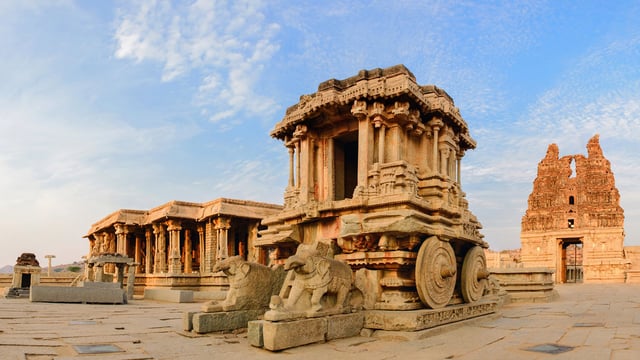
The Milindapanho (Pali: “Questions of Milinda”) is one of the most celebrated non-canonical works of early Buddhist literature. Composed around the 1st Century BCE to 1st Century CE, the text captures the dramatic intellectual and cultural synthesis that occurred in northwestern India following the conquests of Alexander the Great. It is structured as a series of profound philosophical dialogues between an Indo-Greek (Yona) king and a senior Buddhist monastic scholar.
The Protagonists
- King Menander I (Milinda): An Indo-Greek king who ruled a vast dominion from his capital at Sagala (modern-day Sialkot, Punjab, Pakistan) between c. 165 and 130 BCE. Renowned for his military brilliance, administrative justice, and deep intellectual curiosity, Greek historians like Plutarch record that his virtues were so highly revered that upon his death, various cities fought over his ashes, enshrining them in monuments resembling Buddhist stupas.
- Acharya Nagasena: A highly erudite Buddhist sage, philosopher, and Arhat. Trained in the complex psychological systems of the Abhidhamma, Nagasena possessed an exceptional capacity for logical debate, analytical discrimination (Vibhajjavada), and pedagogical allegories.
Linguistic and Structural Composition
The original dialogue is believed by historians to have been initially drafted in the northwest in Sanskrit or a local Prakrit dialect. However, the version that survived and achieved international canonical authority was preserved entirely in Pali, becoming a pillar of the northern and southern Theravada traditions. The text is structurally divided into distinct volumes or books:
- Pubbayoga (Previous History): Details the past-life karmic connections between Menander and Nagasena that destined them to meet in debate.
- Milindapanha (The Questions): The core section featuring the king’s initial challenges regarding the logical paradoxes of Buddhist psychology and metaphysics.
- Mendakapanha (The Dilemmas): A highly sophisticated section where the king presents 82 distinct, contradictory double-pointed dilemmas (Mendakas) designed to expose flaws in the scriptures.
- Anumana Panha (Questions on Inference): Advanced philosophical discussions on the nature of space, time, psychology, and the absolute reality of Nirvana.
Core Metaphysical Debates and Philosophical Triumphs
The enduring value of the Milindapanho lies in how Acharya Nagasena utilizes rational, empirical, and everyday analogies to explain some of the most counter-intuitive tenets of Buddhist metaphysics.
1. The Dismantling of the Ego: The Chariot Analogy
King Menander opened the debate by asking: “If there is no permanent soul, who is it that stands before me? What is your real name or identity?” Nagasena responded by asking the king about the chariot he used to travel to the assembly:
- Is the chariot the axle? No.
- Is it the wheels, the chassis, the pole, or the reins? No.
- Is it something outside of these parts? No.
Nagasena concluded that the word “chariot” is merely a conventional linguistic label (Pannatti) applied to a specific functional arrangement of interdependent parts. When the parts are taken apart, the chariot vanishes from ultimate reality. Similarly, “Nagasena,” “self,” or “soul” is an overarching conventional designation for the temporary, shifting combination of the Pancha-Skandhas (Five Aggregates: form, sensation, perception, mental formations, and consciousness). There is no static “soul-substance” hidden within the human body.
2. Resolving the Paradox of Rebirth Without a Soul
The king raised a major logical objection: “If there is no permanent soul to transmigrate, how can rebirth occur? If I commit a sin in this life, how can a different person be punished for it in the next life?” Nagasena resolved this paradox using two brilliant analogies:
- The Metaphor of the Mango Thief: If a man steals mangoes from a tree planted by another, he cannot escape punishment by arguing: “The mangoes I stole are not the same seeds that the owner physically planted in the dirt.” The stolen mangoes grew as a direct, unbroken causal consequence of the owner’s original planting action.
- The Metaphor of the Transferred Flame: If a person lights a new candle using the flame of an old candle, the light continues to burn. The flame of the second candle is caused directly by the first, yet the actual physical fire of the first candle did not travel across space to inhabit the second candle.
Rebirth operates on this identical principle: the final consciousness of a dying person (Marana-satta-vijnana) provides the immediate causal trigger for the ignition of a new consciousness in a womb (Pratisandhi-vijnana). The karma is transferred through cause-and-effect continuity (Pratityasamutpada) without requiring a physical or spiritual soul-vessel.
3. Defining the Nature of Nirvana
Menander asked if Nirvana is a place or a form of annihilation, and whether its existence can be proven by inference. Nagasena explained that Nirvana is an absolute, unconditioned reality (Asankhata Dhamma) that cannot be described by spatial or physical dimensions, using the Analogy of the Wind:
- The wind cannot be seen, touched, or described by color or shape.
- Yet, no one can deny that the wind exists, as its cooling effect, power, and movement are directly experienced by human skin.
Similarly, Nirvana is not a physical location; it is a psychological reality of unconditioned peace, emotional liberation, and absolute clarity attained when the fires of greed, hatred, and delusion are completely blown out.
Scholastic and Historical Impact of the Text
Textual Authority
While the Milindapanho is technically classified as an apocryphal, non-canonical text in most Theravada nations, the Buddhist tradition of Myanmar (Burma) formally elevated it to the status of absolute canonical scripture, incorporating it as an official book within the Khuddaka Nikaya of the Sutta Pitaka.
The Conversion of Menander
The dialogue concludes with King Menander acknowledging total defeat, expressing profound spiritual illumination, and converting to Buddhism as a lay follower (Upasaka). The text records that he eventually handed over his kingdom to his son, renounced the world, entered the Buddhist Sangha, and through intense practice, achieved the ultimate state of an Arhat.
Quick-Reference Summary Matrix for Prelims
| Evaluative Parameter | Critical Historical Fact / Data Point |
| Chronological Placement | 1st Century BCE – 1st Century CE (depicting events from the 2nd Century BCE). |
| Geographical Setting | Sagala (modern-day Sialkot, Punjab, Pakistan), Indo-Greek Kingdom. |
| Primary Language | Pali (extant version). |
| Core Theme | Reconciliation of Greek philosophical rationalism with Buddhist psychological metaphysics. |
| Key Literary Figure | Frequently quoted and used as the definitive model of commentary writing by the 5th-century CE Theravada scholar Acharya Buddhaghosa in his Visuddhimagga. |
| Numismatic Correlation | Silver and bronze coins minted by King Menander I feature the Greek inscription “Basileos Soteros Menandrou” (King Menander the Savior), and many types prominently feature the Dharmachakra (Eight-spoked wheel), confirming his deep historical alignment with the Buddhist faith. |