
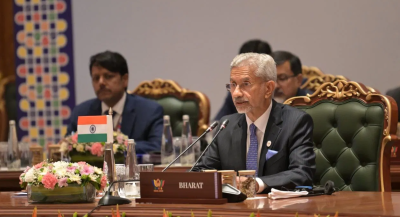
At the BRICS Foreign Ministers’ Meeting held on 14 May 2026 at Bharat Mandapam in New Delhi, India reaffirmed its support for a two-state solution to the Israel-Palestine conflict. External Affairs Minister S. Jaishankar advocated for the establishment of two sovereign states coexisting peacefully within recognized borders. The high-level meeting, which included expanded BRICS members and Iranian Foreign Minister Abbas Araghchi, focused heavily on the security situation in West Asia, including disruptions in the Strait of Hormuz and the Red Sea. India called for an immediate ceasefire, unhindered humanitarian access, and a durable resolution to the crisis in Gaza.
Evolution of the Two-State Solution
The concept of dividing the land between the Jordan River and the Mediterranean Sea into separate Jewish and Arab states dates back to the early 20th century.
Peel Commission Report (1937)
This British commission proposed the first official partition plan. It recommended dividing Mandatory Palestine into a small Jewish state, a larger Arab state linked to Transjordan, and a British-controlled enclave covering Jerusalem. Arab leaders rejected the proposal, while Jewish leadership accepted the principle of partition but disagreed on the proposed borders.
UN Partition Plan / Resolution 181 (1947)
The United Nations General Assembly adopted Resolution 181, which recommended the termination of the British Mandate and the creation of independent Jewish and Arab states. Jerusalem was designated as a Corpus Separatum under international administration. Jewish leaders accepted the plan, but Arab leaders and neighboring Arab states rejected it, leading to the 1948 Arab-Israeli War.
Oslo Accords (1993 and 1995)
The Oslo Accords established a framework for Palestinian self-governance. Signed by Israeli Prime Minister Yitzhak Rabin and Palestine Liberation Organization (PLO) Chairman Yasser Arafat, these accords created the Palestinian Authority (PA). The West Bank was divided into Areas A, B, and C to gradually transfer administrative and security controls to the PA, though a final peace agreement was never finalized.
Arab Peace Initiative (2002)
Endorsed by the Arab League, this Saudi-led initiative offered Israel full normalization of diplomatic relations with Arab nations. The condition required Israel to withdraw from all territories occupied since 1967, including the West Bank, Gaza Strip, and the Golan Heights, alongside the establishment of an independent Palestinian state with East Jerusalem as its capital.
Core Structural Challenges to the Two-State Framework
Implementing a final-status agreement faces deep-rooted geopolitical and administrative hurdles on the ground.
Borders and Territorial Contiguity
The 1967 Green Line serves as the standard baseline for border negotiations. However, the expansion of Israeli settlements in the West Bank has created fragmented territorial enclaves. This fragmentation disrupts the physical contiguity required to sustain a viable, independent Palestinian state.
Status of Jerusalem
Both Israelis and Palestinians claim Jerusalem as their capital. Israel claims the unified city as its eternal, undivided capital under the Jerusalem Law of 1980. Palestinians seek East Jerusalem, which contains holy sites like the Al-Aqsa Mosque compound, as the capital of their future state.
Palestinian Refugee Crisis
The right of return remains a critical sticking point. Palestinians demand that refugees from the 1948 and 1967 conflicts, along with their descendants, be allowed to return to their original homes inside Israel. Israel rejects this demand, arguing that the influx would alter the demographic composition of the state.
Security Considerations
Israel insists on maintaining demilitarized conditions over any future Palestinian entity to prevent cross-border security threats. This includes maintaining security control over the Jordan Valley buffer zone. Conversely, Palestinian leadership demands full sovereignty over its borders, airspace, and defensive capabilities.
India’s Evolving West Asia Policy
India’s diplomatic stance on the Palestine issue has transformed from an ideological pro-Arab position to a pragmatic, de-hyphenated foreign policy.
Historical Framework (Post-Independence to 1992)
India historically opposed the 1947 UN Partition Plan, voting against Resolution 181 in favor of a federal state model. In 1974, India became the first non-Arab state to recognize the PLO as the sole legitimate representative of the Palestinian people. India formally recognized the State of Palestine in 1988.
Establishment of Relations with Israel (1992)
India established full diplomatic relations with Israel in 1992 under Prime Minister P.V. Narasimha Rao. This shift marked the beginning of dual-track engagement, allowing India to build partnerships in defense, agriculture, and intelligence while maintaining political solidarity with Palestine.
The Strategy of De-hyphenation
Under its current foreign policy framework, India handles its relationships with Israel and Palestine independently. Ties with Israel are pursued based on strategic, technological, and defense cooperation, separate from India’s ongoing diplomatic commitments to the Palestinian cause.
Key Geopolitical Parameters
| Parameter | Israeli Position | Palestinian Position |
| Borders | Defensible borders modifying the 1967 lines to incorporate major settlement blocs. | Complete withdrawal to the 4 June 1967 lines with mutually agreed land swaps. |
| Jerusalem | Sovereign control over a unified Jerusalem as Israel’s capital. | Sovereign control over East Jerusalem as the capital of Palestine. |
| Gaza Control | Demilitarization, strict border management, and neutralization of militant factions. | Complete cessation of blockades and structural integration with the West Bank. |
| Sovereignty Level | Conditional, limited sovereignty for Palestine without heavy military capabilities. | Full, unrestricted sovereign statehood recognized by the United Nations. |
IASPOINT Booster Facts for UPSC
- Camp David Accords (1978): Signed by Egyptian President Anwar Sadat and Israeli Prime Minister Menachem Begin, leading to the 1979 Egypt-Israel Peace Treaty.
- Madrid Conference (1991): A co-sponsored peace conference by the US and the USSR that initiated direct bilateral negotiations between Israel and its Arab neighbors.
- Quartet on the Middle East: Established in 2002 in Madrid, this body comprises the United Nations, the United States, the European Union, and Russia to mediate the peace process.
- Abraham Accords (2020): Bilateral normalization agreements signed between Israel and Arab nations, including the United Arab Emirates, Bahrain, Morocco, and Sudan.
- Operation Iron Swords: The official military campaign launched by Israel in October 2023 following the cross-border attacks by Hamas.
- ICJ Advisory Opinion (2024): The International Court of Justice issued an advisory opinion declaring Israel’s continued presence in the occupied Palestinian territory unlawful under international law.
- UN General Assembly Status: Palestine was granted “Non-member Observer State” status at the United Nations in 2012 via Resolution 67/19.