
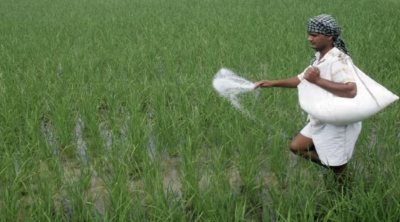
India has reduced its dependence on fertiliser imports by raising domestic production and improving supply security. Recently, nearly 73% of the country’s total fertiliser requirement was met through domestic production. The development marks a major step towards Atmanirbhar Bharat in the agriculture input sector and supports timely availability of nutrients for farmers.
Domestic Production Rises Sharply
India’s total domestic fertiliser production has shown steady growth over the last five years. Production of urea, DAP, NPKs and SSP increased from 433.29 lakh tonnes in 2021 to 467.87 lakh tonnes in 2022. It further rose to 507.93 lakh tonnes in 2023, 509.57 lakh tonnes in 2024, and touched an all-time high of 524.62 lakh tonnes in 2025.
Policy Push Behind Growth
The rise in output has been supported by policy measures aimed at strengthening the fertiliser sector. These include:
- Establishment of new fertiliser plants.
- Revival of closed manufacturing units.
- Promotion of indigenous production.
- Assured availability of raw materials.
- Long-term supply agreements for key inputs.
Strategic Diversification And Supply Security
The government has adopted strategic diversification to reduce exposure to global price shocks and supply disruptions. This approach is important because India depends on imported raw materials and fertilisers such as phosphatic and potassic inputs. Better supply planning has helped improve resilience in the fertiliser ecosystem and reduced vulnerability to external uncertainties.
Significance For Agriculture And Economy
Higher domestic production supports farmers through more reliable and affordable access to fertilisers. It also strengthens food security by ensuring uninterrupted nutrient supply during the cropping cycle. The growth reflects a broader effort to build a self-reliant agricultural economy and improve long-term fertiliser security.
Last Modified: April 25, 2026