
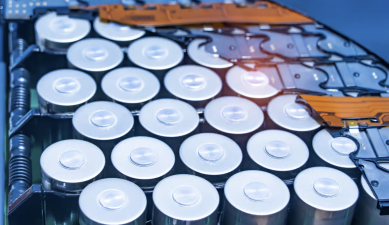
India’s Advanced Chemistry Cell Production Linked Incentive (ACC-PLI) scheme, launched in October 2021 to build domestic battery manufacturing, is facing major implementation delays. A recent assessment has flagged weak progress, import dependence, and supply chain gaps as key obstacles to the scheme’s success. The programme was designed to reduce reliance on China, support electric vehicle growth, and create a local battery ecosystem.
Scheme Objectives and Design
The ACC-PLI scheme was introduced by the Ministry of Heavy Industries with an outlay of ₹18,100 crore. It aimed to attract large-scale investment in advanced battery cell manufacturing through production-linked incentives. Selected firms were to receive subsidies based on battery output, with a maximum support of ₹2,000 per kWh. The scheme also required:
- Minimum investment of ₹1,100 crore by each beneficiary.
- 25% local manufacturing within two years.
- 60% local manufacturing within five years.
Slow Project Execution
The plan had targeted 50 GWh of manufacturing capacity by 2026. However, by October 2025, only 1.4 GWh had been commissioned on time, while 8.6 GWh remained delayed. No incentives had been disbursed because none of the selected firms had begun commercial battery sales. Among the beneficiaries, Ola Electric, Reliance New Energy, and Rajesh Exports won allocations, while Hyundai Global later exited. The report notes that some selected firms lacked prior experience in battery manufacturing, which added to execution risks.
Structural Challenges in the Sector
India still lacks a mature battery ecosystem. Critical mineral refining, cell component production, and specialised technical expertise remain limited. This has left the sector heavily dependent on imports, especially from China. Other constraints include:
- Delays in visas for Chinese technical specialists.
- Short timelines for installation and commissioning.
- High domestic value-add requirements.
- Limited availability of critical technologies.
Impact on EV and Jobs Growth
The battery sector is central to India’s electric vehicle transition, as EVs account for about 70-80% of battery demand. The scheme was also expected to generate around 1.03 million jobs. So far, only 1,118 jobs have been created, reflecting a sharp gap between targets and outcomes. The delays may affect India’s broader goals for EV adoption, energy storage, and supply chain resilience.
Last Modified: April 27, 2026