
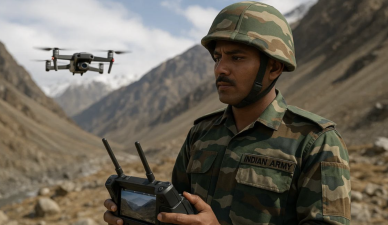
India has taken a new step in unmanned defence with the Indian Army signing a Rs 168 crore contract for a solar-powered surveillance drone system. The platform, called the Medium Altitude Persistent Surveillance System (MAPSS), has been developed by Bengaluru-based NewSpace Research & Technologies under the Defence Ministry’s iDEX innovation programme. It is the first solar-powered surveillance drone to be inducted by the Army.
What MAPSS Is
MAPSS is designed for long-endurance aerial surveillance. Unlike conventional drones that rely on batteries or fuel, it uses solar energy to remain airborne for extended periods. This makes it suitable for persistent observation over border areas and remote terrain. The system is intended for intelligence, surveillance and reconnaissance missions.
Operational Use
The Army plans to deploy MAPSS across sensitive regions, including high-altitude sectors in the north and desert areas in the west. Its key roles include:
- Tracking troop and vehicle movement.
- Monitoring border activity.
- Supporting communication links in remote areas.
- Assisting target detection during operations.
Because it is electrically powered, the drone is quieter and generates less heat, making it harder to detect.
Development And Trials
The system builds on NewSpace’s earlier work on high-altitude solar drones. Similar platforms have reportedly remained airborne for more than 24 hours at altitudes above 26,000 feet. These tests were conducted at the Aeronautical Test Range in Chitradurga. The Army version has been adapted for medium-altitude use and has undergone trials in operational areas.
Significance For Defence Modernisation
The deal is part of a wider expansion of drone capability in the Indian Army. Since Operation Sindoor, the force has added loitering munitions and surveillance drones through contracts worth over Rs 5,000 crore. MAPSS adds a new layer of persistent surveillance and reflects the growing role of Indian startups in defence innovation. It also supports the shift towards longer endurance, lower operating costs and indigenous technology in border security.
Last Modified: April 25, 2026