
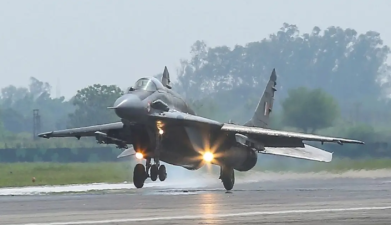
The Indian Air Force is set to arm its MiG-29 fighter jets with the Advanced Short Range Air-to-Air Missile (ASRAAM), replacing the ageing R-73 missile. The upgrade is intended to improve the aircraft’s close-combat performance, range, and overall air-to-air capability. The MiG-29 remains an important part of India’s air defence network, especially on the western front.
Missile Integration Plan
The Ministry of Defence issued a request for proposals on 25 March for integration and testing of ASRAAM on the MiG-29 UPG variant. The contract covers missiles, launchers, associated equipment, and training for aircrew and ground personnel. The missile is already integrated on the LCA Tejas and Jaguar aircraft.
ASRAAM Capability
ASRAAM is a European-designed short-range air-to-air missile built by MBDA. It uses heat-seeking technology and works on a fire-and-forget principle. Once launched, it guides itself to the target without further pilot input. It can fly at speeds above Mach 3 and has a range of more than 25 kilometres. The missile weighs 88 kilograms, is 2.9 metres long, and carries a high-explosive warhead.
Replacement of R-73
The MiG-29 currently uses the Soviet-era R-73 missile, which has a maximum range of about 10 to 15 kilometres. ASRAAM offers more than double that range and is considered a fourth-generation weapon. India plans to replace the R-73 across its entire MiG-29 inventory, which includes more than 55 aircraft, including trainer variants.
Strategic Significance
The upgrade comes amid continued operational importance of the MiG-29 in Indian air defence. The aircraft is used for air superiority and multi-role missions, including air-to-air and air-to-ground roles. India has also moved towards local assembly and testing of ASRAAM through Bharat Dynamics Limited, with a dedicated facility under construction in Hyderabad. The move is expected to strengthen India’s combat readiness against aerial threats from China and Pakistan.
Last Modified: April 29, 2026