
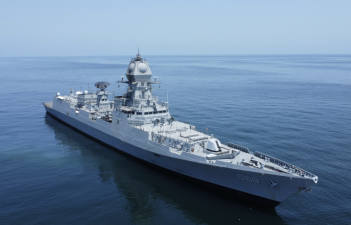
INS Arnala, the Indian Navy’s first indigenously designed and built Anti-Submarine Warfare Shallow Water Craft, marks an important step in India’s naval self-reliance. The vessel is the lead ship of a new class meant for operations in coastal and shallow waters, where submarine detection is difficult and operational conditions are complex. It reflects the Navy’s shift from a buyer-oriented force to a builder-oriented force under the Aatmanirbhar Bharat vision.
Key Features of INS Arnala
- INS Arnala is designed for anti-submarine warfare in shallow waters.
- It is built to detect, track and counter hostile submarines near the coast.
- The ship has more than 80 per cent indigenous content.
- It represents a major milestone in domestic warship design and construction.
Indigenous Shipbuilding Ecosystem
The vessel has been built by Garden Reach Shipbuilders & Engineers under a Ministry of Defence programme to strengthen indigenous defence manufacturing. The project involved public and private sector participation, along with a wide network of MSMEs. These firms supplied combat systems, sensors and other equipment, showing the growing depth of India’s defence industrial base.
Strategic Importance for the Navy
- Shallow-water anti-submarine operations are crucial for coastal security.
- Such craft improve surveillance in littoral zones and harbour approaches.
- They help protect naval assets, trade routes and maritime infrastructure.
- The class adds flexibility to India’s undersea warfare capability.
Maritime Heritage and Naming
INS Arnala is named after the historic Arnala Fort off Vasai in Maharashtra. The naming continues the Navy’s practice of linking warships with India’s maritime heritage. The launch of the ship underlines both strategic capability building and symbolic continuity in India’s naval tradition.
Last Modified: April 28, 2026