
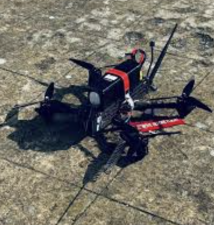
India has stepped up its drive to build a domestic drone manufacturing ecosystem as part of its wider push for strategic autonomy, defence preparedness and Aatmanirbhar Bharat. The focus is on strengthening not only final drone assembly, but also the local production of critical components such as moulds, software, engines and batteries. The initiative comes amid global conflicts that have brought into light the growing military importance of drones and counter-drone systems.
Mission-Mode Push for Defence Self-Reliance
The defence leadership stressed that India must emerge as a global hub for indigenous drone manufacturing in the coming years. The emphasis is on reducing dependence on imports, especially for sensitive components that are often sourced from abroad. The message underlined that future warfare will increasingly depend on unmanned systems, making domestic capability a strategic necessity.
Launch of New Innovation Challenges
The National Defence Industries Conclave saw the launch of the 14th Defence India Start-up Challenge (DISC-14) and the 4th ADITI challenge under the iDEX framework. A total of 107 problem statements were introduced, including 82 under DISC-14 and 25 under ADITI 4.0. These were drawn from the Defence Forces, Indian Coast Guard and Defence Space Agency. In addition, 101 innovation challenges from Defence Public Sector Undertakings were launched to support design-led innovation by MSMEs and start-ups.
iDEX and MSME Ecosystem Expansion
Since the launch of iDEX in 2018, around 676 start-ups, MSMEs and individual innovators have joined the defence innovation ecosystem. So far, 548 contracts have been signed and 566 challenges launched. A total of 58 prototypes have been cleared for procurement, valued at about Rs 3,853 crore, while 45 procurement contracts worth nearly Rs 2,326 crore have already been signed. The initiative is helping convert innovation into deployable defence technologies.
Advanced Manufacturing and Policy Support
The conclave brought into light technologies such as artificial intelligence, robotics, automation, additive manufacturing and digital twins. It also underlined the need for horizontal and vertical integration among MSMEs and large industries. The government has also introduced measures to support MSMEs through equity, liquidity and professional support, along with digital platforms such as Udyam and Udyam Assist. New publications and an exhibition were also launched to promote defence exports, ease of doing business and industry participation.
Last Modified: April 29, 2026