
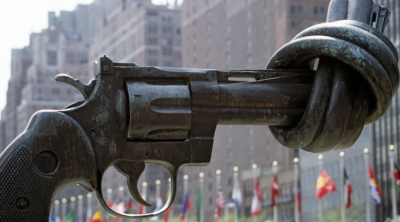
The International Day for Disarmament and Non-Proliferation Awareness is observed on 5 March to build public understanding of disarmament issues, especially among young people. The day marks the continuing relevance of multilateral arms control in maintaining international peace and security. It also draws attention to nuclear weapons, conventional arms, illicit small arms trade, and emerging technologies such as autonomous weapons.
Purpose of the Day
The observance promotes awareness of the risks posed by weapons and the need for global cooperation on disarmament. It underlines that excessive military spending can strain national budgets and fuel arms races. The day also seeks to strengthen public support for peaceful and rules-based security arrangements.
UN Disarmament Framework
The United Nations Office for Disarmament Affairs (UNODA) supports multilateral efforts towards general and complete disarmament under effective international control. It provides support to the UN General Assembly, its First Committee, the Disarmament Commission and the Conference on Disarmament. UNODA also encourages transparency, confidence-building, regional disarmament measures and post-conflict disarmament efforts.
Nuclear Disarmament Concerns
Nuclear weapons remain the most dangerous weapons because of their destructive power and long-term humanitarian impact. Although their global stockpile has declined since the Cold War peak, about 12,500 nuclear weapons are still reportedly in existence. More than 2,000 nuclear tests have been carried out so far. The UN has pursued nuclear disarmament since 1946, when its first General Assembly resolution created a commission on atomic energy control.
Key Treaties and Emerging Challenges
Several treaties shape the global non-proliferation regime:
- The Treaty on the Non-Proliferation of Nuclear Weapons (NPT).
- The Comprehensive Nuclear-Test-Ban Treaty (CTBT), which is not yet in force.
- The Treaty on the Prohibition of Nuclear Weapons (TPNW).
New concerns include autonomous weapons, explosive weapons in populated areas, and the illicit spread of small arms and light weapons. These issues affect civilian protection, sustainable development and international stability.
Last Modified: April 28, 2026