
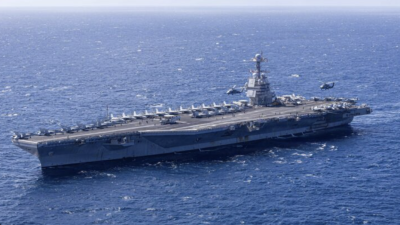
The nuclear-powered aircraft carrier USS Gerald R. Ford is moving across the Atlantic with its public tracking beacon active, a rare step for an operational warship. The carrier strike group is approaching the Strait of Gibraltar as the United States reinforces its naval posture in the Central Command region amid heightened tensions with Iran and ongoing indirect diplomacy over Tehran’s nuclear programme.
Carrier Repositioning
The Ford departed earlier from the Caribbean after supporting operations in the Western Hemisphere and is now sailing eastward at high speed. Open maritime tracking places it close to the Strait of Gibraltar, the gateway between the Atlantic and the Mediterranean. If the carrier maintains its pace, it could reach the eastern Mediterranean within days.
Possible Link-Up With USS Abraham Lincoln
The Ford is expected to join the USS Abraham Lincoln Carrier Strike Group, which is already deployed in the northern Arabian Sea. Together, the two carrier groups would provide a major concentration of U.S. naval air power near Iran. The Ford carries advanced aircraft, including F-35C fighters, while the Lincoln brings a large strike air wing and destroyer escorts.
Diplomacy and Military Pressure
The deployment comes alongside indirect U.S.-Iran talks mediated by Oman. The main dispute remains uranium enrichment and sanctions relief. Washington wants Iran to stop all enrichment, while Tehran insists on its right to peaceful nuclear technology and seeks broad sanctions relief. The military movement increases pressure as negotiations continue without a breakthrough.
Strategic Significance
The Ford’s transit may lead to one of the largest U.S. carrier concentrations in the region in recent years. Its air wing, combined with the Lincoln’s aircraft and escort ships, would expand strike, surveillance, and electronic warfare capabilities. The build-up also follows Iranian naval drills in the Strait of Hormuz, a vital route for global oil shipments.
Last Modified: April 28, 2026