
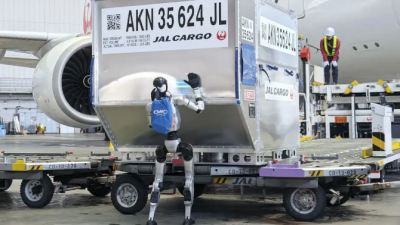
Japan Airlines and GMO AI & Robotics will begin a demonstration experiment with humanoid robots at Tokyo’s Haneda Airport in May 2026. The project will run for two to three years until 2028 and will test robots for airport ground handling operations.
Airport Ground Handling
Airport ground handling includes baggage movement, cargo loading, aircraft servicing, and support operations on the tarmac. In aviation, ground handling also covers conveyor belt operations, cargo container movement, and cabin cleaning.
Robot Features
The trial will use Chinese-made humanoid robots, including 130 cm tall Unitree models. The robots will move luggage and cargo containers on the tarmac and push cargo onto conveyor belts.
- Humanoid robots have a human-shaped body design that allows use in spaces built for workers.
- The design can reduce the need for major changes to airport facilities and aircraft structures.
- Wheeled robots often require different movement paths and operating spaces.
Labour Shortage Context
Japan’s aviation industry faces labour shortages linked to rising inbound tourism and an ageing population. The trial aims to use robots for physically demanding tasks that require repeated lifting and pushing.
Future Use Cases
JAL and GMO AI & Robotics plan to expand the robots’ functions to aircraft cabin cleaning and ground support equipment operations. JAL Ground Service has stated that safety management will remain a human responsibility during the experiment.
Japan’s First Airport Humanoid Robot Trial
This is Japan’s first known trial of humanoid robots for airport ground handling. The experiment began as a response to labour shortages in aviation and will continue through 2028.
Last Modified: April 29, 2026