
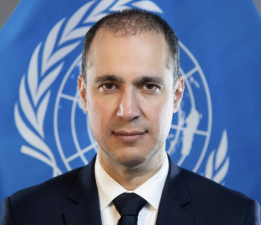
Kaveh Madani, director of the United Nations University Institute for Water, Environment and Health (UNU-INWEH), has been named the 2026 recipient of the Stockholm Water Prize. The award is regarded as the world’s most prestigious honour for water-related work. The announcement was made ahead of World Water Day, and the prize will be formally presented by Sweden’s King Carl XVI Gustaf during World Water Week in Stockholm in August.
About the Award
The Stockholm Water Prize recognises outstanding contributions to water science, policy and management. Madani is the youngest laureate in the award’s 35-year history. He is also the first UN official and the first former politician to receive the honour. The committee brought into light his combination of research, diplomacy and public outreach.
Why Madani Was Chosen
Madani was selected for his work on water resources management and his efforts to connect science with policy. His research has focused on:
- Water governance and resource allocation.
- Decision analysis and game theory in water disputes.
- Long-term adaptation to water scarcity.
- Public communication on water risks.
He is known for introducing the concept of water bankruptcy, which describes a situation where water shortages become a structural and persistent failure rather than a temporary crisis.
Career and Political Context
Born in Tehran in 1981, Madani studied civil engineering and later worked in Sweden, the United States and the United Kingdom. He served in Iran’s environment administration in 2017, where he pushed for water governance reforms and transparency. He later faced political backlash, arrest and interrogation, and left Iran in 2018. He then joined Yale University before moving into the UN system.
Global Water Significance
Madani’s work has influenced debates on water stress, climate adaptation and transboundary water management. He has argued that many river basins and aquifers are no longer facing short-term shortages but long-term depletion. His leadership at UNU-INWEH continues to link scientific research with practical policy solutions for governments and international institutions.
Last Modified: April 29, 2026