
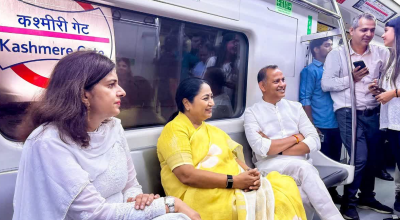
Delhi Chief Minister Rekha Gupta launched the ‘Metro Monday’ initiative to promote public transport use and conserve fuel, following Prime Minister Narendra Modi’s appeal amid the escalating West Asia crisis. The campaign operates as part of the broader nationwide ‘Mera Bharat, Mera Yogdan’ public drive. It encourages citizens, government officials, and policymakers to reduce private vehicle use, thereby saving fuel and lowering urban air pollution. Alongside Metro Monday, the Delhi government announced coordinated administrative measures like two work-from-home days weekly, a freeze on official foreign visits, and a weekly ‘No Vehicle Day’ to enhance urban mobility and support national energy security goals.
Components of the Metro Monday Initiative
Public Transport Transition
The core objective of Metro Monday is to transition daily commuters, including top government functionaries, from private vehicles to public transit networks. Delhi government ministers, legislators, and senior administrative officials utilize the Delhi Metro and Delhi Transport Corporation (DTC) electric feeder buses for their official travel. This shift aims to reduce daily traffic congestion and lower peak-hour vehicular emissions.
Fuel Rationing and Administrative Timings
To enforce strict energy conservation within the administration, the Delhi government implemented a 20% reduction in the petrol limits allocated for official vehicles. Additionally, office timings between the Delhi Government Secretariat and the Municipal Corporation of Delhi (MCD) have been staggered. This structural adjustment prevents simultaneous peak-hour traffic rushes, optimizing fuel efficiency during commutes.
The ‘Mera Bharat, Mera Yogdan’ Delhi Action Plan
Energy and Macroeconomic Interventions
The ‘Mera Bharat, Mera Yogdan’ campaign is a nationwide public awareness drive launched in response to global energy supply chain disruptions caused by conflicts in West Asia. The Delhi Action Plan under this campaign expands beyond public transport to encompass comprehensive economic and energy resilience measures.
Key Policy Measures of the Action Plan
- Work From Home (WFH) Mandate: Government departments must implement two work-from-home days every week for employees wherever feasible to minimize fuel usage and unnecessary travel.
- Foreign Travel Freeze: A one-year absolute freeze has been placed on official foreign visits by state officials to curtail discretionary expenditure and carbon footprints.
- Virtual Administration: Administrative wings must maximize video conferencing for inter-departmental meetings, reducing physical transit requirements.
- Voluntary Public Participation: Citizens are urged to voluntarily observe a weekly ‘No Vehicle Day’, adopt carpooling practices, and reduce home electricity wastage.
Strategic Objectives of Fuel Conservation
Macroeconomic Stability and Import Substitution
India imports over 80% of its crude oil requirements, making the national economy highly vulnerable to geopolitical shocks and price volatility in West Asia. Large-scale fuel conservation initiatives reduce the national import bill, preserve foreign exchange reserves, and insulate the domestic economy from imported inflation.
Urban Environmental Benefits
Decarbonizing urban transport directly addresses air quality degradation in the National Capital Region (NCR). Restricting private internal combustion engine (ICE) vehicular movement lowers the concentration of Particulate Matter (PM2.5 and PM10), Nitrogen Oxides (NOx), and Carbon Monoxide (CO).
Coordinated Policy Matrix
| Initiative | Target Group | Primary Objective |
| Metro Monday | Government Officials & Public | Shift to Metro/Electric Buses; reduce peak congestion |
| 20% Fuel Cut Mandate | Government Department Vehicles | Immediate reduction in state petroleum consumption |
| Staggered Timings | Delhi Govt & MCD Staff | De-congesting arterial roads to prevent idling fuel loss |
| Bi-weekly WFH | Eligible Administrative Staff | Eliminating transit power and vehicular fuel use |
| No Vehicle Day | General Citizens (Voluntary) | Promoting localized walking, cycling, and public transit |
IASPOINT Booster Facts for UPSC
- National Mission for Enhanced Energy Efficiency (NMEEE): One of the eight missions under India’s National Action Plan on Climate Change (NAPCC), aimed at strengthening the market for energy efficiency through regulatory and policy instruments.
- Petroleum Conservation Research Association (PCRA): A registered society under the Ministry of Petroleum and Natural Gas, Government of India, engaged in promoting energy efficiency and conservation in various sectors of the economy.
- Strategic Petroleum Reserves (SPR) of India: To ensure energy security, India maintains strategic crude oil storage facilities managed by Indian Strategic Petroleum Reserves Limited (ISPRL) at three locations: Visakhapatnam, Mangaluru, and Padur.
- FAME India Scheme: The Faster Adoption and Manufacturing of (Hybrid &) Electric Vehicles scheme is the flagship incentive program of the Ministry of Heavy Industries aimed at promoting eco-friendly public and private transportation.
- Hydrocarbon Visualisation: Crude oil refining yields fractions based on boiling points. Transport sectors primarily consume Diesel (C10-C15 hydrocarbons) and Petrol/Gasoline (C5-C12 hydrocarbons), both of which release Carbon Dioxide (CO2) and water vapor (H2O) upon complete combustion.